Theme 2: Homeostasis
grade 11 biology · theme 2
2.1 Importance of Homeostasis for Living Organisms
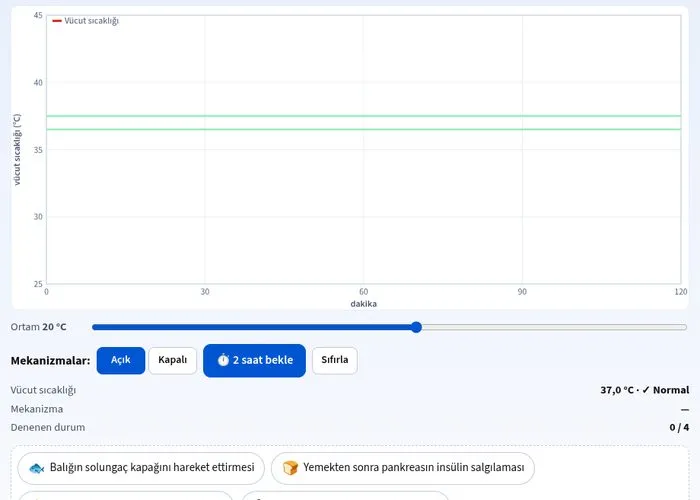
Homeostasis thermostat: change the ambient temperature between −10 °C and 45 °C; compare how body temperature changes over time in the graph when regulatory mechanisms are on and off; classify homeostatic balance adaptations in living things
Open Simulation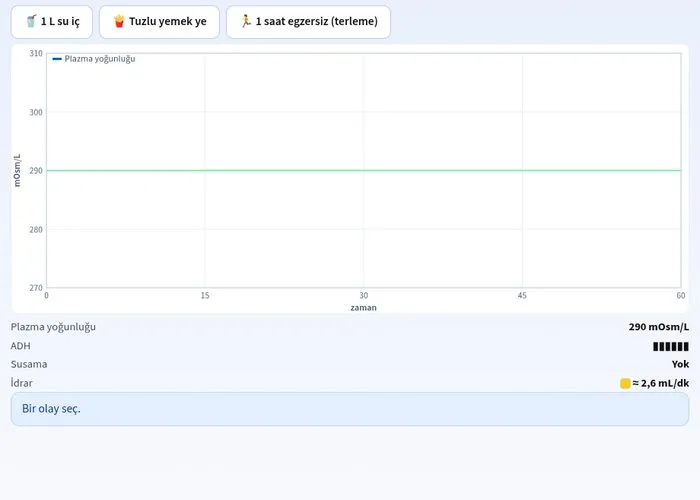
2.2 Homeostatic Processes
Water and electrolyte balance: drink water, eat salty food, sweat during exercise; how do blood plasma density, hypothalamus–ADH and thirst sensation, urine volume and density change? Body temperature, blood pressure and toxin excretion processes
Open Simulation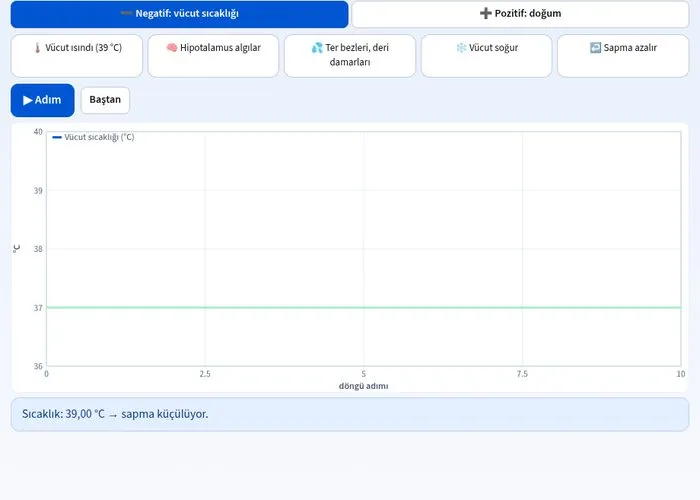
2.3 Positive and Negative Feedback
Negative and positive feedback: step-by-step exercise and graph comparison of error correction in the thermostat loop versus amplifying effects in the oxytocin loop during childbirth; classify examples
Open Simulation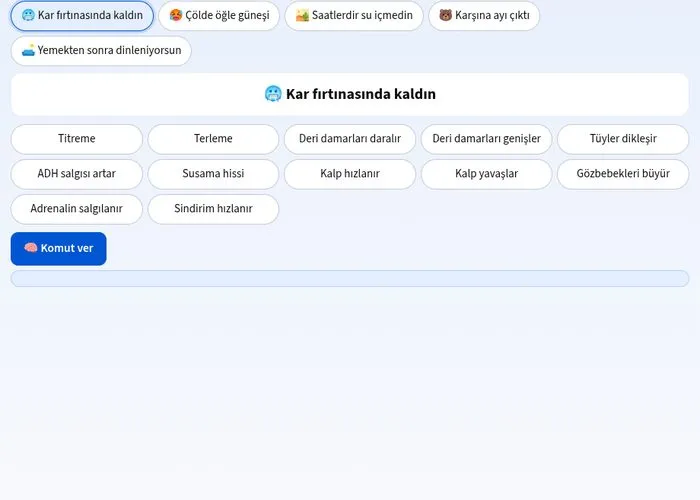
2.4 Effects of the Nervous System on Homeostasis
Hypothalamus control room: keep the body in balance by choosing the correct neural and hormonal responses in cold, hot, thirst, hunger and danger scenarios; the role of the sympathetic and parasympathetic systems in homeostasis
Open Simulation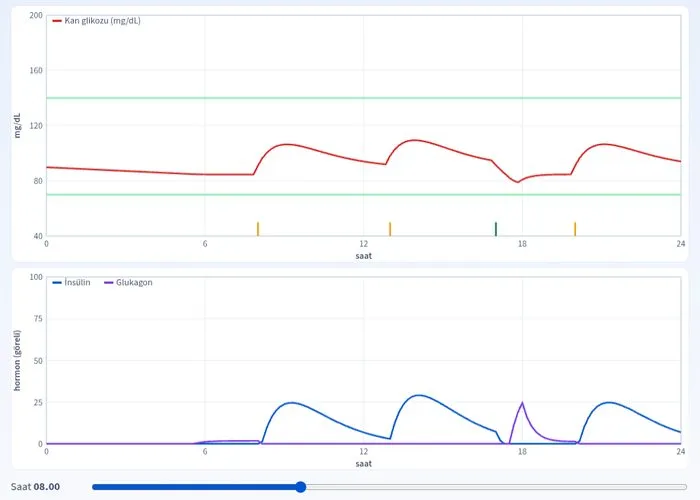
2.5 Homeostatic Function of the Endocrine System
Blood sugar simulator: add breakfast, dessert, exercise and fasting events over a course of a day; observe insulin and glucagon maintaining glucose in the 70–110 mg/dL range; match endocrine glands with their hormones
Open Simulation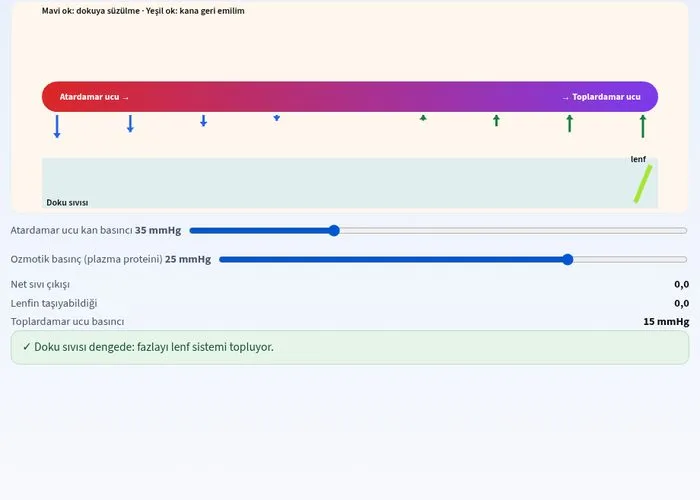
2.6 Circulatory System and Homeostasis
Capillary exchange (Starling): balance filtration and reabsorption at the arterial and venous ends of the capillary using blood pressure and plasma protein sliders; discover edema formation and the role of the lymphatic system
Open Simulation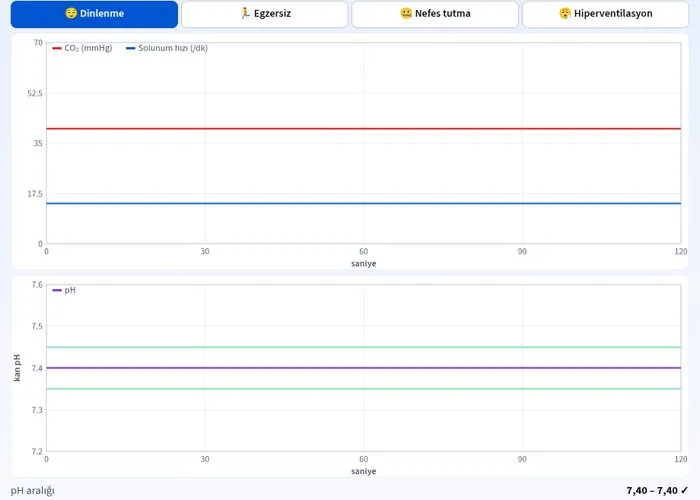
2.7 The Role of the Respiratory System in Homeostasis
Respiratory control: increase exercise intensity, hold your breath or hyperventilate; track changes in blood CO₂, pH and O₂ on a graph along with how the medulla oblongata adjusts breathing rate
Open Simulation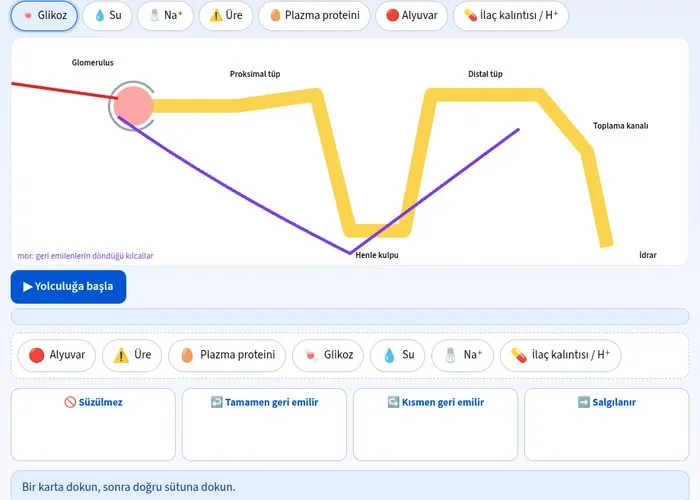
2.8 The Role of the Excretory System in Homeostasis
Nephron journey: follow glucose, water, Na⁺, urea, protein and red blood cells from the glomerulus to urine; see the steps of filtration, reabsorption and secretion; calculate the formation of 1,5 L of urine from 180 L of filtrate per day
Open Simulation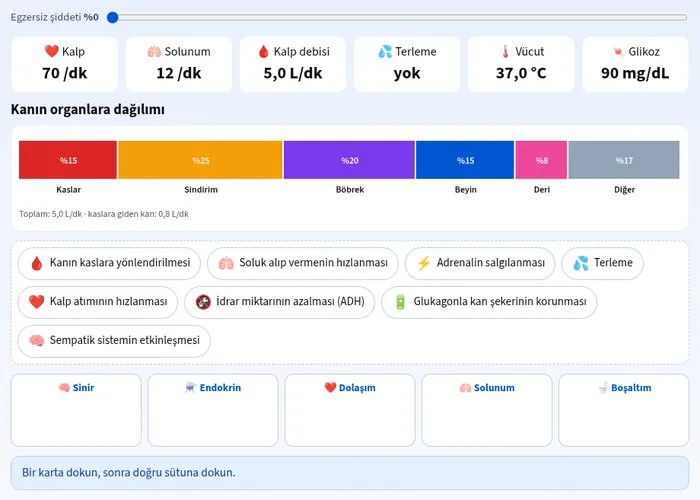
2.9 Coordinated Function of Systems
Coordination of systems: increase exercise intensity from rest to maximum; monitor changes in heart rate, respiration, sweating, blood sugar and blood distribution to organs together; match which system produces which response
Open Simulation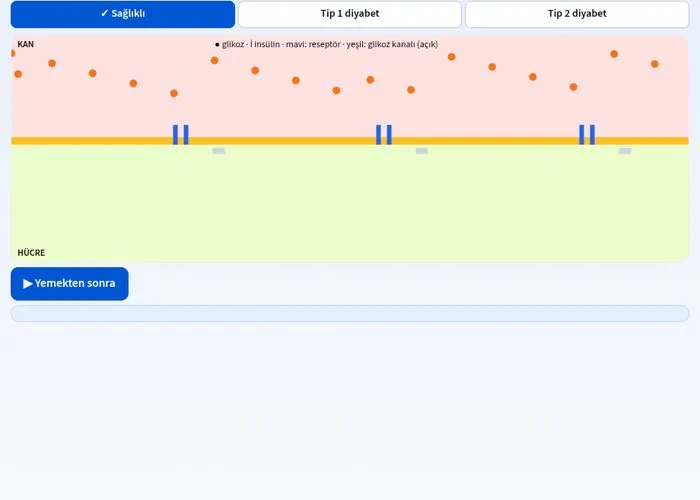
2.10 Situations Where Homeostasis Cannot Be Maintained
When homeostasis fails: operate the insulin–receptor–glucose channel model in healthy, type 1 and type 2 diabetic cells; diagnose patient cases (diabetes, hypertension, obesity, thyroid) by looking at data and determine prevention methods
Open Simulation