Coordination of systems: increase exercise intensity from rest to maximum; monitor changes in heart rate, respiration, sweating, blood sugar and blood distribution to organs together; match which system produces which response
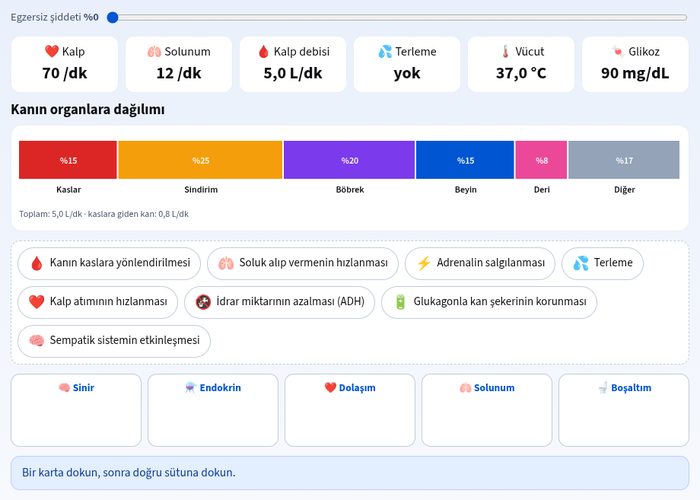
Discover how body systems work in harmony with each other within the theme of homeostasis through this interactive experiment. With the coordinated function of systems simulation, by increasing exercise intensity, you can instantly track changes in heart rate, respiration, sweating, blood sugar, and blood distribution to organs, and match physiological responses with the correct systems.
What can you do in this simulation?
You can observe different body responses simultaneously by changing the exercise intensity.
You can numerically track changes in heart rate and breathing rate.
You can examine processes such as adrenaline secretion, activation of the sympathetic system, and directing blood to the muscles.
You can match physiological events with the relevant organs and systems by dragging and dropping cards into appropriate boxes or columns.
You can follow the steps guided by the assistant and instantly check your correct and incorrect answers.
Basic concepts and formulas
The nervous system and endocrine system work together to maintain internal balance (homeostasis) in living organisms. To meet the increased oxygen demand during exercise, cardiac output (Q) and tidal volume increase. Cardiac output, expressed by the formula Q = Stroke Volume · Heart Rate, increases the amount of blood going to the muscles, ensuring sufficient oxygen and glucose are transported to the cells.
How to use?
Start the simulation by increasing the exercise intensity and observe the changes in the body.
Match the cards appearing on the screen with the corresponding box or column by touching or dragging and dropping them.
Use the check button to test your answers.
Review the steps that remain incomplete or incorrect and repeat the experiment from the beginning.
Frequently asked questions
Why does heart rate increase during exercise?
The sympathetic system stimulates the heart to meet the muscles' increased need for oxygen and nutrients and to remove metabolic wastes.
What happens if homeostasis is disrupted?
The body's internal balance is shaken, cells cannot sustain their vital activities, and physiological disorders arise in the organism.
How is coordination between systems achieved?
The nervous system provides coordination through fast and electrical impulses, while the hormonal system does so through slow but long-lasting chemical messages.
 Interactive experiment