Theme 1: Response
grade 11 biology · theme 1
1.1 Response Mechanisms of Different Living Organisms
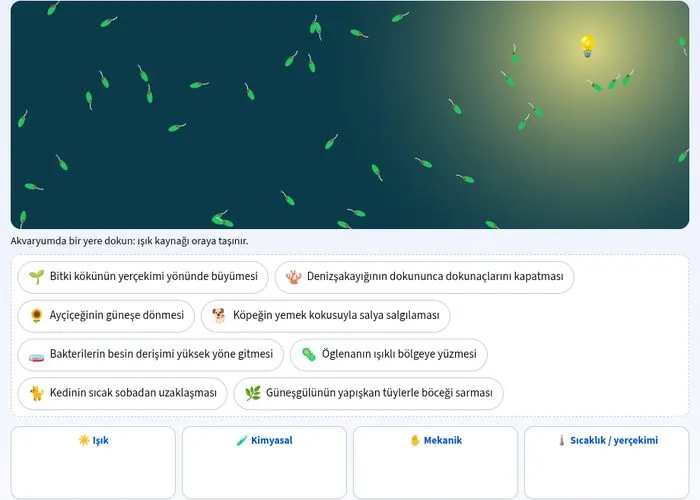
Stimulus and response: move the light source to watch euglenas swim toward light (phototaxis); classify sea anemone, sundew, bacteria, and dog examples according to stimulus type
Open Simulation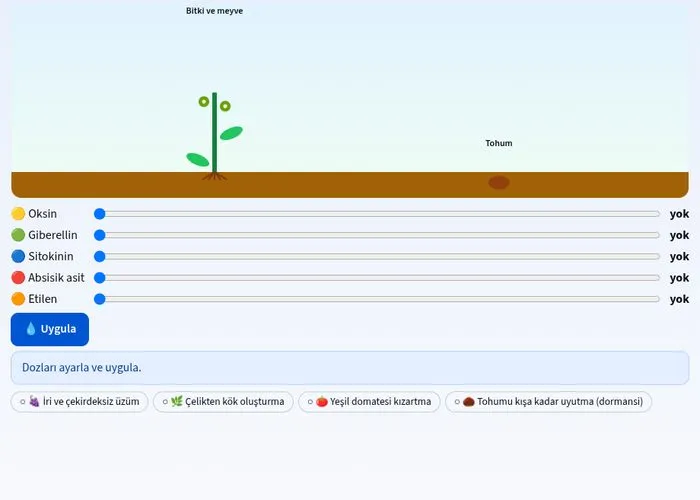
1.2 Effects of Plant Hormones
Plant hormone greenhouse experiment: adjust doses of auxin, gibberellin, cytokinin, abscisic acid, and ethylene; achieve targets of seedless large grapes, rooted cuttings, ripening fruit, and seed dormancy
Open Simulation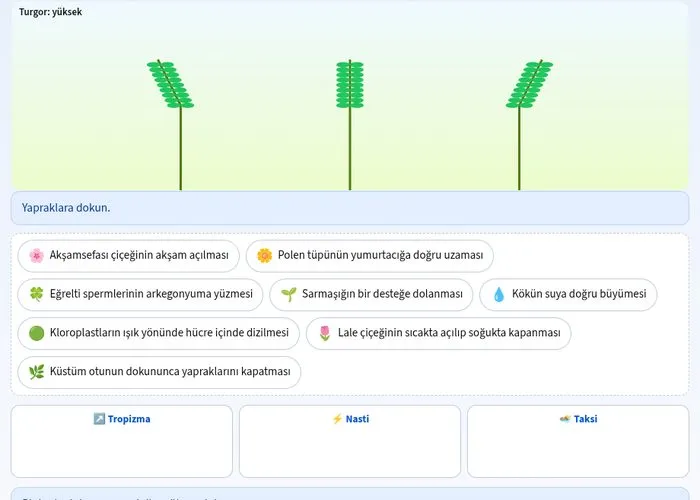
1.3 Response Mechanisms in Plants
Movement in plants: touch the sensitive plant and watch the leaves close via turgor changes; classify movements in response to light, touch, temperature, and chemical stimuli as tropism, nastic movement, and taxis
Open Simulation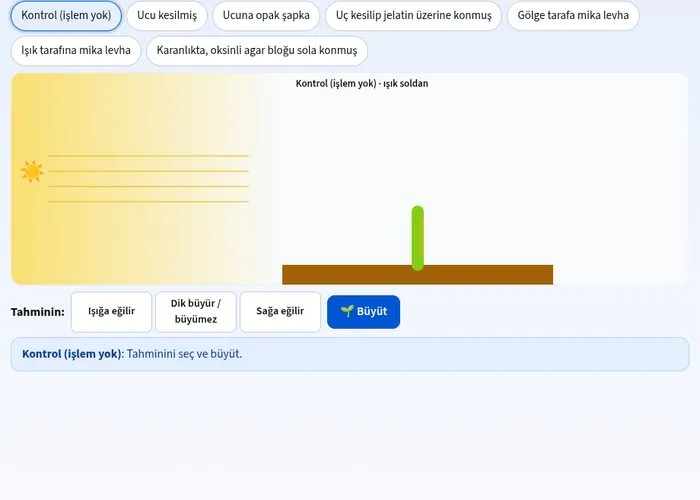
1.4 Tropism Movements in Plants
Coleoptile experiments: grow seedlings with cut tips, foil caps, mica and gelatin barriers, and auxin-containing agar blocks under unilateral light; discover the role of auxin in phototropism through Darwin, Boysen-Jensen, and Went experiments
Open Simulation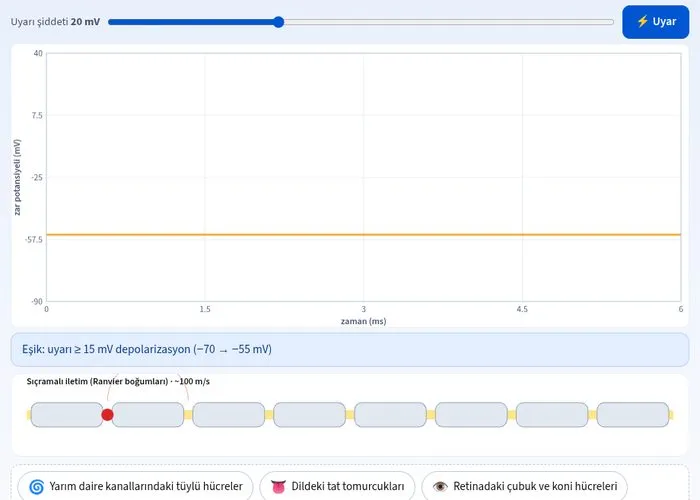
1.5 Sensory Receptors and Sense Organs
Neuron and sensory receptor: change stimulus intensity and see threshold value and all-or-none rule on the action potential graph; effect of myelin sheath on conduction speed; match sense organs with receptor types
Open Simulation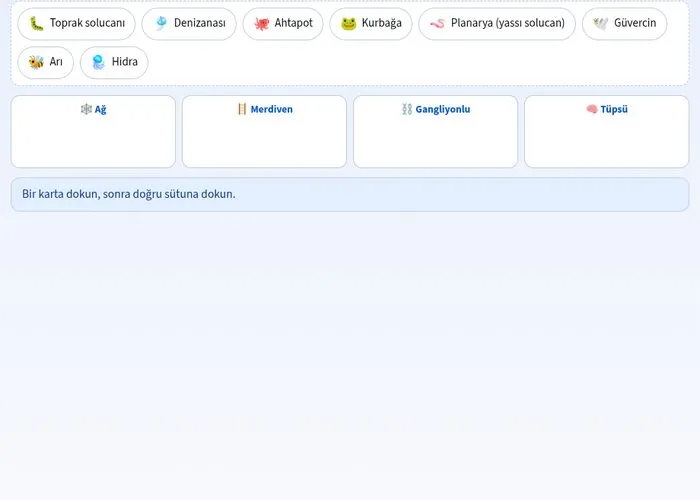
1.6 Nervous System Differences in Animals
Evolution of the nervous system in animals: nerve net, nerve ladder, ganglionated, and tubular nervous systems from hydra to mammal; compare relative sizes of vertebrate brain regions and relate them to lifestyle
Open Simulation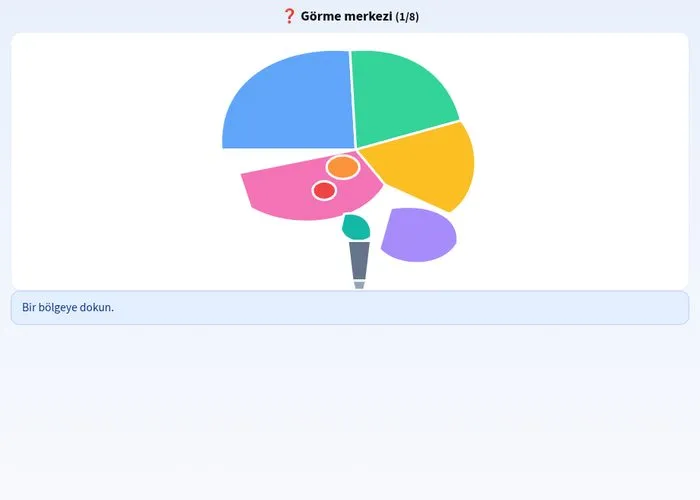
1.7 Human Nervous System
Human nervous system map: touch brain regions to find their functions (cerebral cortex lobes, cerebellum, thalamus, hypothalamus, pons, medulla oblongata); compare effects of sympathetic and parasympathetic systems on organs
Open Simulation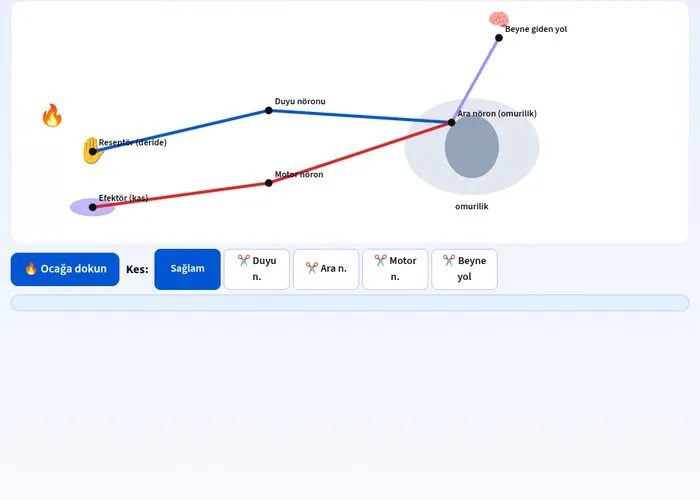
1.8 Reflex Mechanism
Reflex arc: simulate the pathway of the impulse from receptor to muscle in a hand touching a hot stove; cut the sensory, inter-, or motor neuron or the pathway going to the brain to test what happens to the reflex and sensation
Open Simulation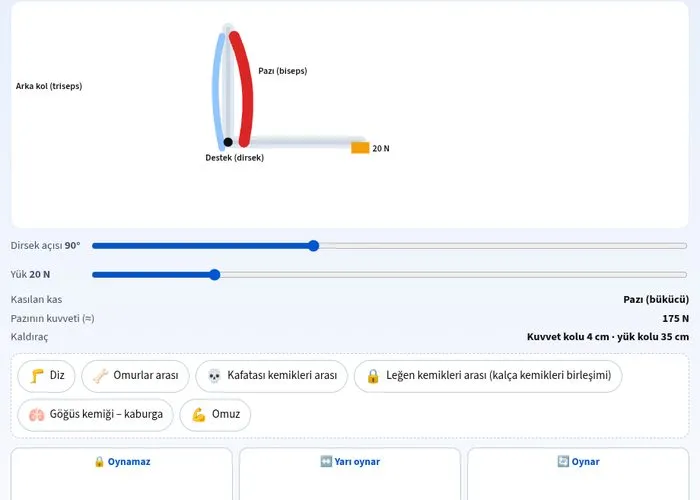
1.9 Movement-Based Response
The arm is a lever: change elbow angle and the load held in the hand; calculate the antagonistic work of biceps and triceps muscles and the force the muscle must apply; classify joints by their range of motion
Open Simulation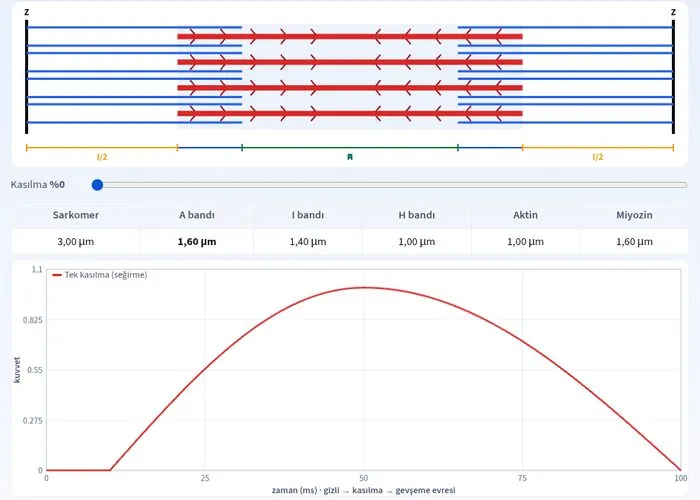
1.10 Contraction and Relaxation Mechanism of Skeletal Muscles
Sarcomere simulation: observe the sliding of actin and myosin filaments by changing the contraction rate; measure that the A band remains constant while I and H bands shorten; order the contraction steps and examine the muscle twitch curve
Open Simulation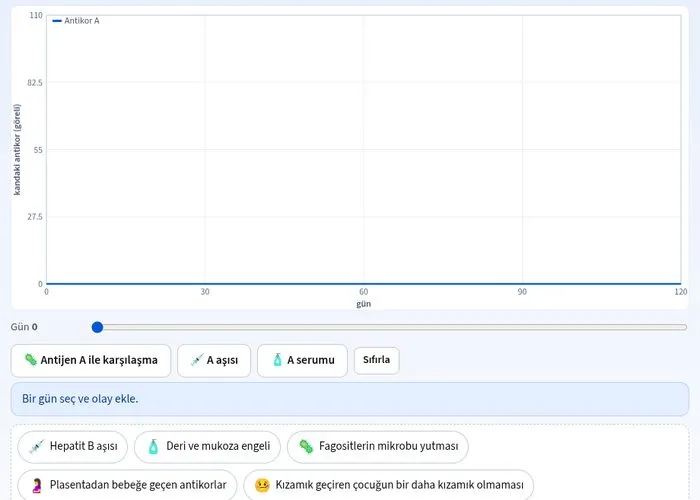
1.11 Immune System
Immune timeline: expose the body to an antigen, vaccinate, or give preformed antibodies (serum); compare the antibody concentration graph in primary and secondary immune responses; classify natural and acquired, active and passive immunity
Open Simulation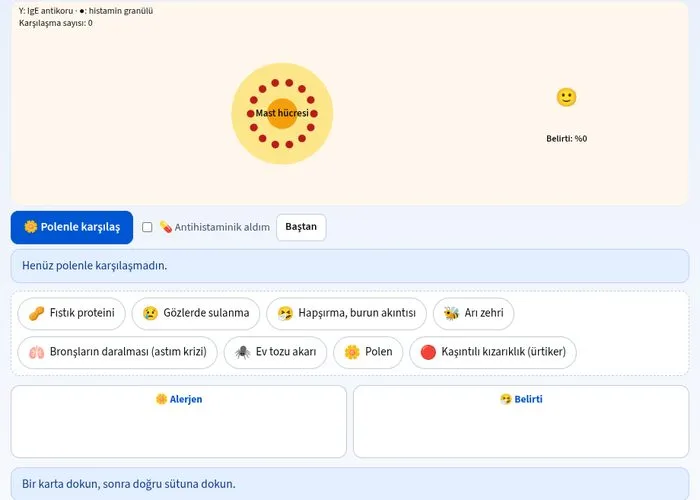
1.12 Allergic Responses
Allergic response: simulate the binding of IgE antibodies to mast cells upon first exposure to pollen (sensitization) and the release of histamine upon second exposure; examine the effect of antihistamines and anaphylaxis
Open Simulation