Human nervous system map: touch brain regions to find their functions (cerebral cortex lobes, cerebellum, thalamus, hypothalamus, pons, medulla oblongata); compare effects of sympathetic and parasympathetic systems on organs
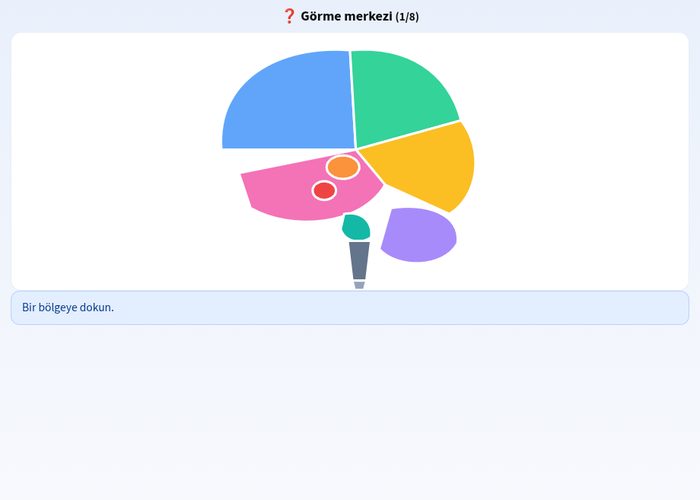
Interactively explore the effects of brain regions and the autonomic nervous system on the body with the human nervous system simulation. Featured in the Response theme of the 11 biology class, this experiment allows you to learn about the brain lobes and the opposing functions of the sympathetic and parasympathetic systems on organs. You can place the cards into the correct boxes by dragging and dropping or tapping, and test your knowledge instantly.
What can you do in this simulation?
You can learn the brain map by matching the functions of the frontal, parietal, occipital, and temporal lobes.
You can discover the functions of critical structures such as the cerebellum, thalamus, hypothalamus, pons, and medulla oblongata.
You can examine the effects of the sympathetic system, which manages the fight-or-flight response, on heart rate, pupil, bronchi, and blood sugar.
You can compare the slowing and constriction responses created in organs by the parasympathetic system in the rest-and-digest state.
Basic concepts and formulas
The central nervous system consists of the brain, cerebellum, medulla oblongata, and spinal cord. While the cerebral cortex manages thinking, consciousness, and voluntary movements, the thalamus is the first station where senses other than smell are distributed to the cortex. The hypothalamus maintains homeostasis (body temperature and water balance). The autonomic nervous system is divided into sympathetic (accelerator/activator) and parasympathetic (restorative/protective) and works antagonistically on organs.
How to use?
Examine the cards that open on the experiment screen and read the content of the information card.
Select the card and match it with the brain region or box it belongs to (you can drag and drop).
Press the check your answer button to see the accuracy of your match.
Review the hints on the steps where you made mistakes and return to the guide to review the topics.
Frequently asked questions
What is the primary function of the frontal lobe?
The frontal lobe manages higher-level cognitive functions such as thinking, decision-making, planning, voluntary muscle movements, and speech.
Why do the sympathetic and parasympathetic systems work antagonistically?
These two systems work together to maintain the body's internal balance (homeostasis); while the sympathetic system activates the body in times of danger, the parasympathetic system provides calming and energy conservation.
Which vital activities does the medulla oblongata supervise?
The medulla oblongata controls involuntary vital reflex centers such as heart rate, respiration, swallowing, vomiting, and coughing.
 Interactive experiment