Allergic response: simulate the binding of IgE antibodies to mast cells upon first exposure to pollen (sensitization) and the release of histamine upon second exposure; examine the effect of antihistamines and anaphylaxis
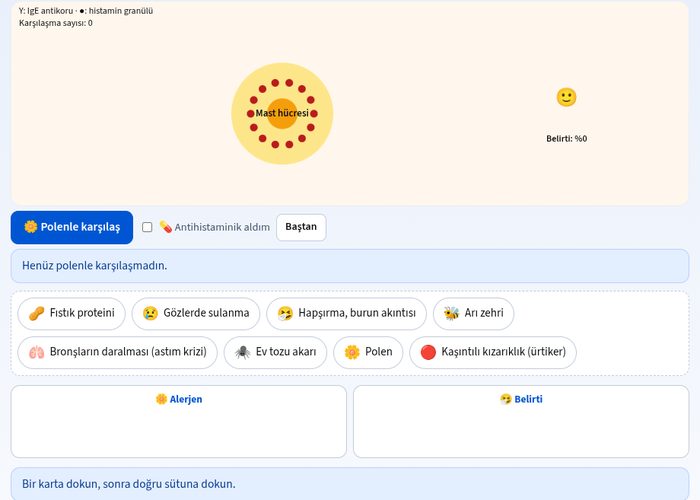
Explore step by step the response given by the immune system against allergens such as pollen, house dust mites, peanut protein, and bee venom with the allergic responses simulation. This interactive experiment allows you to observe interactively: the settling of IgE antibodies onto mast cells during the first exposure, the release of histamine during the second exposure, and the effect of antihistamine medications. It is an excellent resource for reinforcing the 11th grade biology course 1th theme topics and understanding immune mechanisms.
What can you do in this simulation?
You can experience the first exposure and second exposure processes by pressing the pollen button twice.
You can see how histamine release and allergic symptoms in the body decrease by applying the antihistamine option.
You can place allergens, mast cells, and symptoms such as sneezing, runny nose, and itchy rash into the correct boxes by dragging and dropping the cards.
You can test your knowledge about sensitization and anaphylaxis processes by answering the questions under Raista's guidance.
You can repeat different scenarios by restarting the experiment and make up for your shortcomings with correct answers.
Basic concepts and formulas
An allergy is the immune system's overreaction to harmless substances. During the initial exposure, B lymphocytes produce IgE antibodies, and these antibodies bind to mast cells, sensitizing the cell. When encountered with the same allergen a second time, the antigen-antibody combination leads to the stimulation of mast cells and the release of stored histamine. Histamine increases vascular permeability, triggering allergic symptoms such as sneezing, itching, and bronchial constriction.
How to use?
Start by reading the instructions on the experiment panel and press the pollen button for the first time.
Examine the settling of IgE antibodies onto mast cells during the initial exposure.
Observe histamine release and the emergence of symptoms by pressing the pollen button a second time.
Test the effect of the medication by using the antihistamine button.
Complete the allergen and symptom matching tasks by finishing the card matching assignments.
Frequently asked questions
Why are symptoms not observed upon initial exposure in allergic responses?
During the initial exposure, the immune system recognizes the allergen and produces IgE antibodies to arm mast cells, but since histamine release has not yet been triggered, clinical symptoms do not appear.
What kind of changes does histamine release cause in the body?
Histamine increases capillary permeability, contracts smooth muscles, and triggers mucus secretion; this causes sneezing, runny nose, itching, and asthma attacks.
How do antihistamine medications prevent allergies?
Antihistamines prevent histamine from binding to target receptors or suppress its release, alleviating allergic symptoms such as sneezing and itching.
 Interactive experiment