Unit 3: Optics
grade 11 physics · unit 3
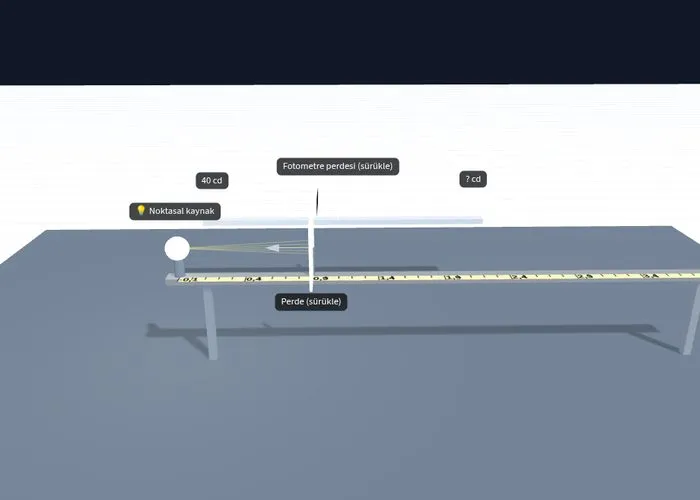
3.1 Luminous Intensity, Luminous Flux, and Illuminance
Luminous intensity and illuminance: change the lamp's intensity, distance to the surface, and surface inclination; measure illuminance with E = I·cos θ / d²; calculate unknown luminous intensity in a photometer by finding the point where two lamps illuminate the screen equally
Open Simulation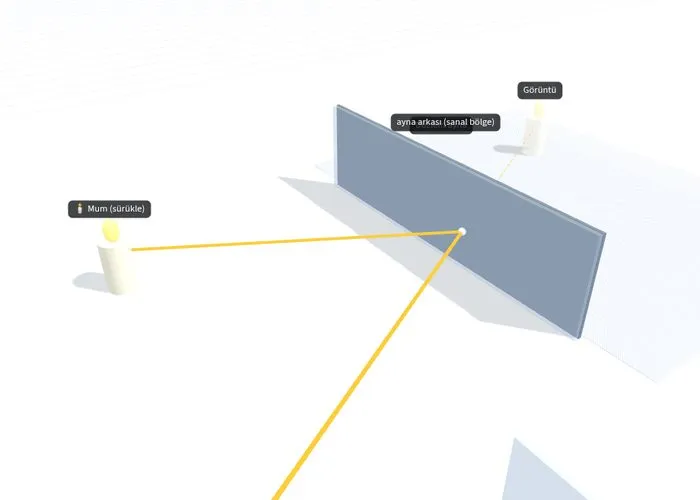
3.2 Plane Mirrors
Plane mirror: drag the object and see that the image is symmetric, upright, virtual, and equal in size to the mirror; field of view of the eye; number of images formed in two angled mirrors n = 360/α − 1
Open Simulation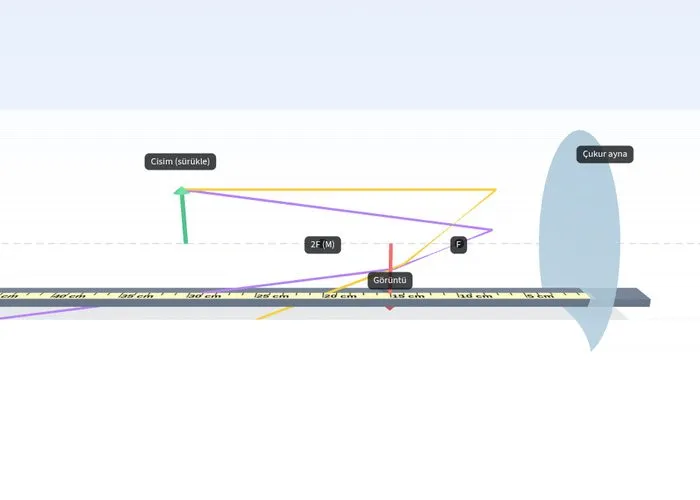
3.3 Spherical Mirrors
Spherical mirrors: change the object distance for concave and convex mirrors; draw the image using special rays, 1/f = 1/d₀ + 1/dᵢ and find the magnification and the location, size, real/virtual, and erect/inverted nature of the image
Open Simulation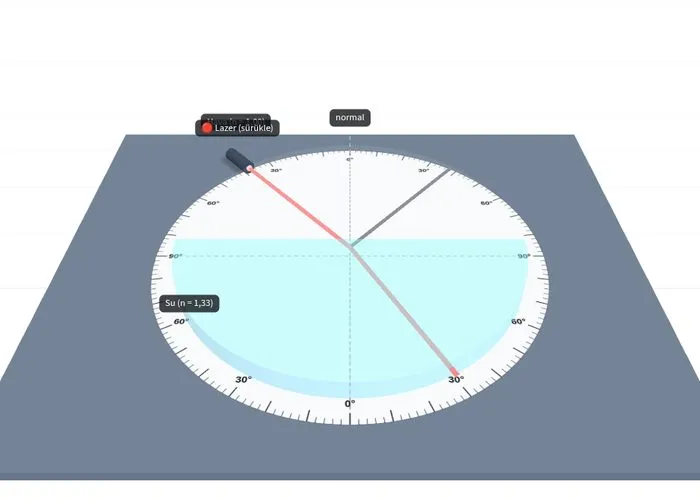
3.4 Refraction
Refraction: change the angle of incidence as light passes between air, water, glass, and diamond; Snell's law n₁ sin θ₁ = n₂ sin θ₂; critical angle and total internal reflection when passing from a denser to a rarer medium
Open Simulation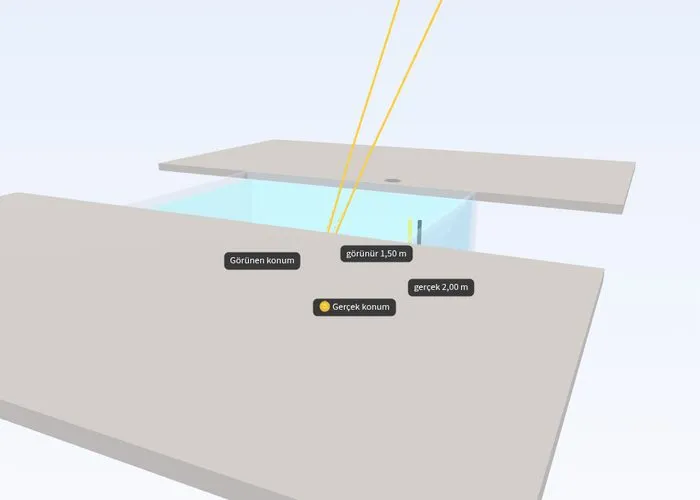
3.5 Apparent Depth
Apparent depth: look at a coin in a pool from above; change the real depth and the liquid, discover through the extension of refracted rays that the coin appears closer and the relation h' = h·n_observer/n_object; the broken appearance of a spoon in water
Open Simulation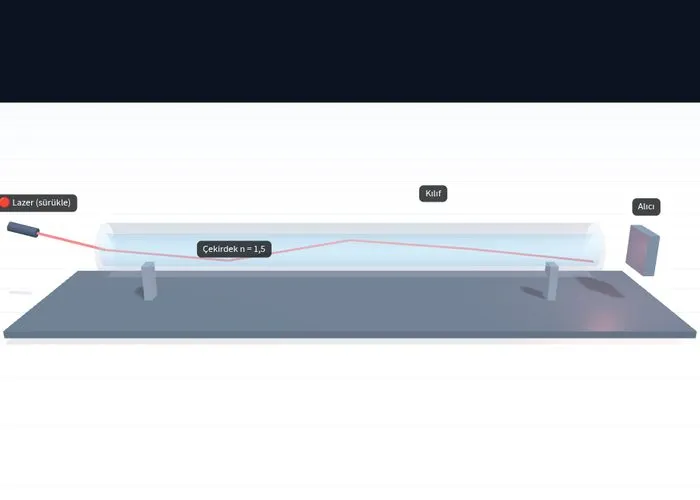
3.6 Fiber Optics
Fiber optics: send light at different angles into a fiber with a core-cladding structure; observe its propagation via total internal reflection and its escape from the cladding below the critical angle; the effect of core and cladding refractive indices on the acceptance angle
Open Simulation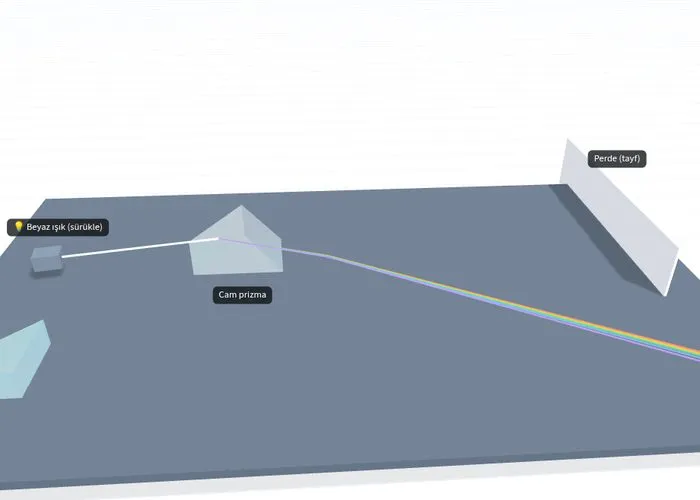
3.7 Prisms
Prisms: split white light into colors by passing it through a glass prism (dispersion); measure the angle of deviation by changing the apex angle and the angle of incidence; minimum deviation and redirecting light with a total internal reflecting (45°) prism
Open Simulation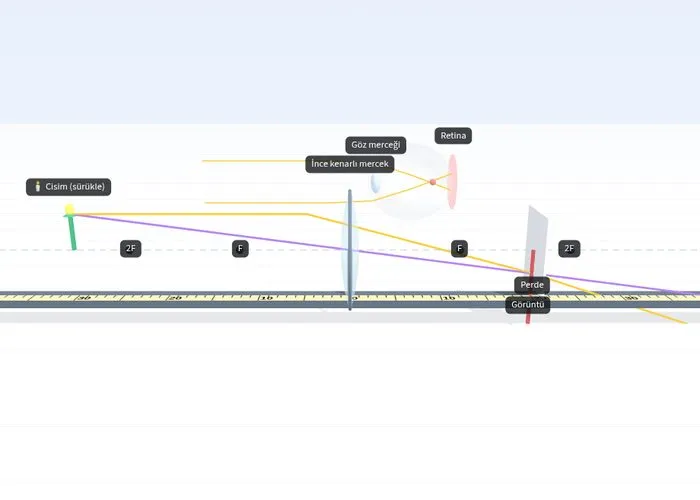
3.8 Lenses
Thin lenses: move the object in converging (convex) and diverging (concave) lenses; find the image using special rays, 1/f = 1/d₀ + 1/dᵢ and magnification; magnifying glass, camera, and correction of vision defects
Open Simulation