Theme 1: Energy
grade 10 biology · theme 1
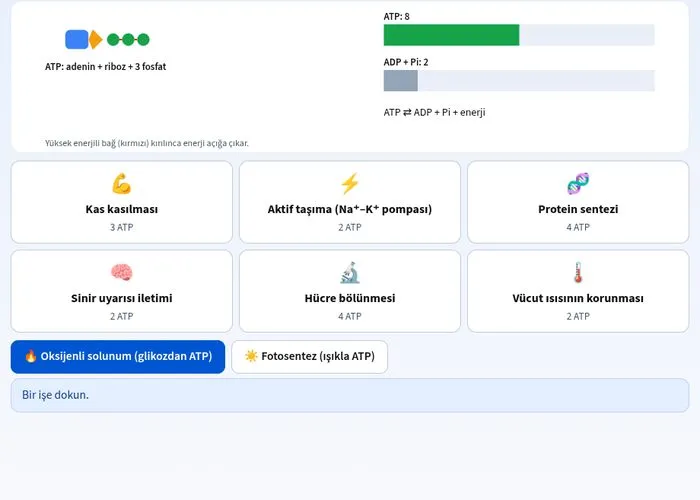
1.1 Importance of Energy for Life
ATP: the energy currency of the cell. Power processes like muscle contraction, active transport, and protein synthesis by breaking down ATP into ADP + Pi; regenerate ATP through respiration and photosynthesis
Open Simulation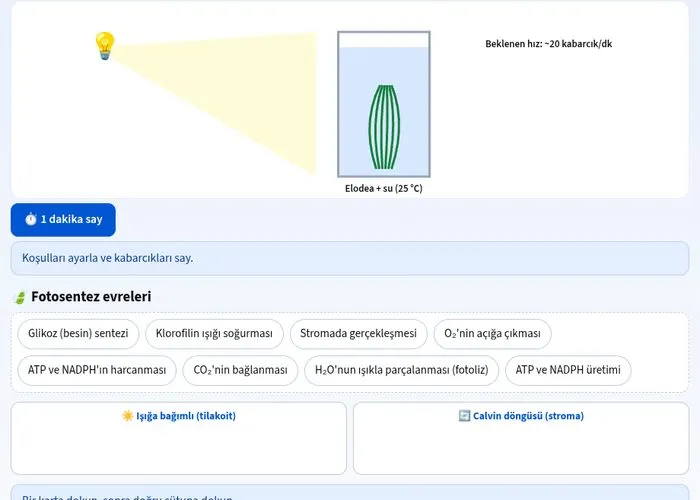
1.2 Synthesis of Nutrients Using Light Energy (Photosynthesis)
Photosynthesis: In the Elodea (waterweed) experiment, measure the effect of light intensity, light color, CO₂ and temperature on O₂ bubble rate; light-dependent reactions and Calvin cycle model
Open Simulation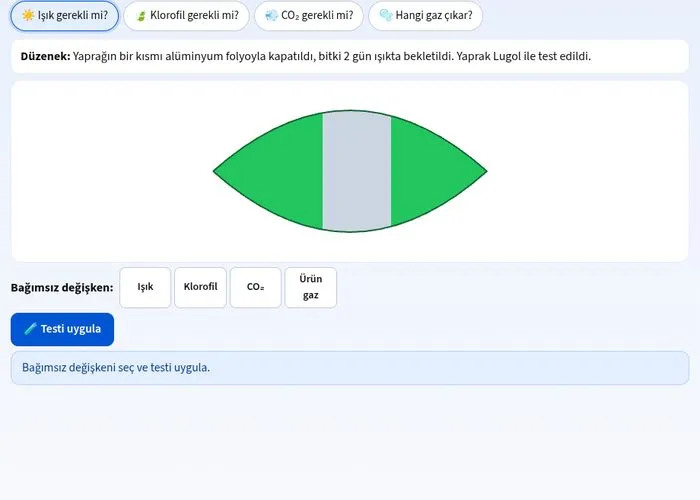
1.3 Substances Used and Produced in Photosynthesis
Design a controlled experiment: foil-covered leaf, variegated leaf, CO₂-free bell jar and gas from Elodea; prove the inputs and products of photosynthesis with iodine (Lugol) test and a glowing splint
Open Simulation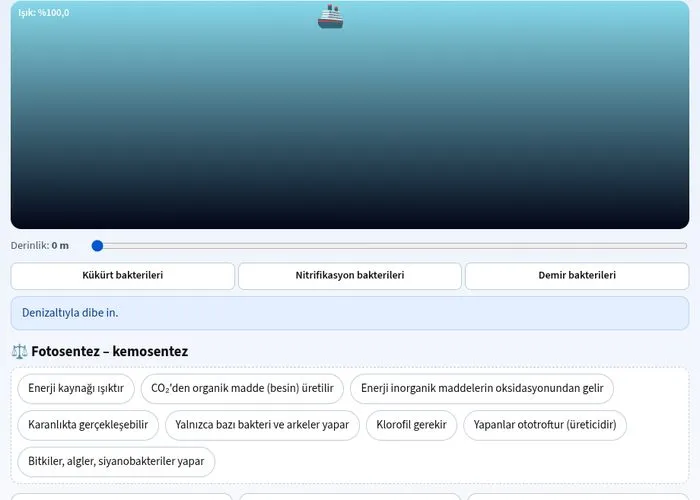
1.4 Synthesis of Nutrients Without Using Light Energy (Chemosynthesis)
Chemosynthesis: hydrothermal vents on the ocean floor where light does not reach; chemosynthetic bacteria obtaining energy from the oxidation of inorganic substances; photosynthesis–chemosynthesis comparison
Open Simulation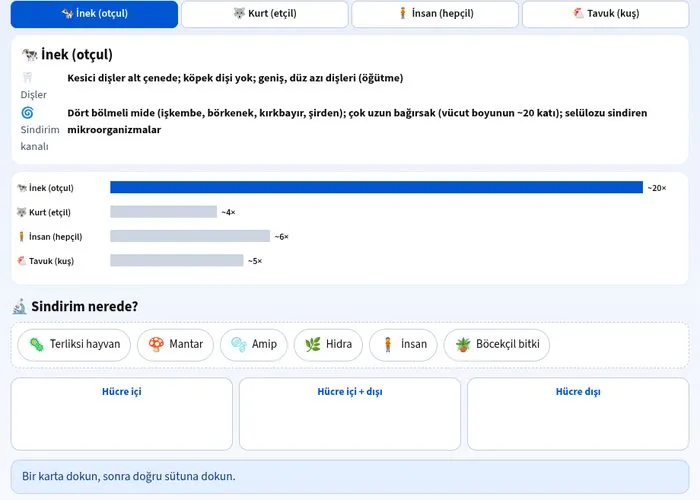
1.5 Digestion
Digestion in living organisms: intracellular and extracellular digestion; tooth and gastrointestinal adaptations in herbivores, carnivores and omnivores; the four-chambered stomach of ruminants
Open Simulation
1.6 Human Digestion
Digestive journey in humans: move a bite from the mouth to the large intestine; activate the correct enzyme in each organ; breakdown of carbohydrates, proteins and fats; absorption and transport in villi
Open Simulation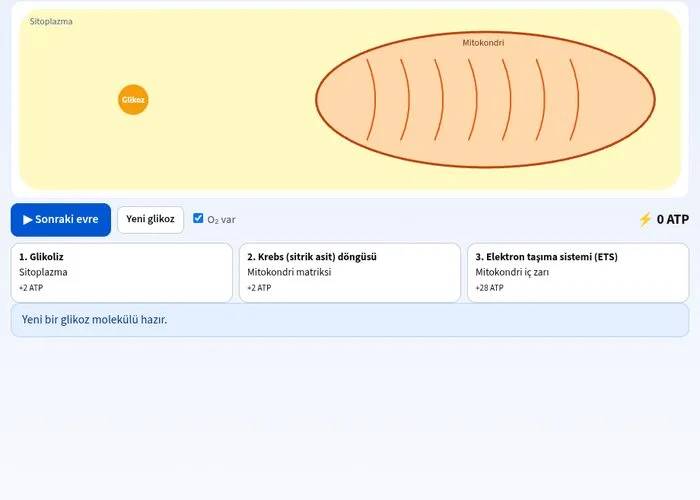
1.7 Cellular Respiration
Cellular respiration: pass a glucose through glycolysis, the Krebs cycle and the electron transport system; location, products and ATP yield of each stage; role of oxygen and anaerobic respiration
Open Simulation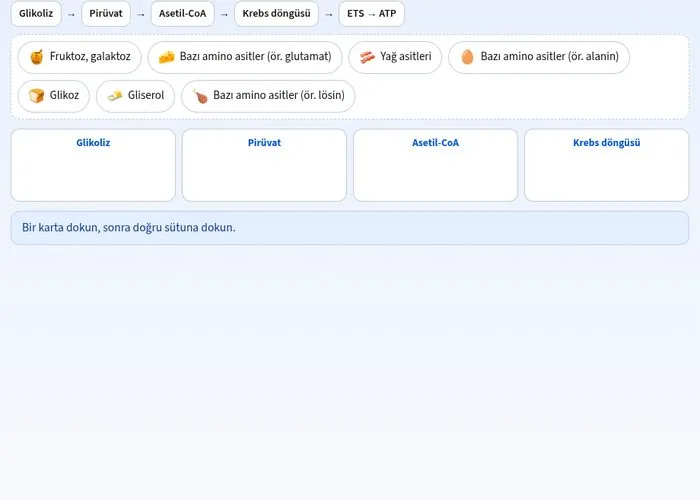
1.8 Pathways of Nutrients Entering Respiration
Pathways of nutrients entering respiration: place the building blocks of carbohydrates, fats and proteins at the entry points in the respiratory pathway; deamination and ammonia; order of energy sources in starvation
Open Simulation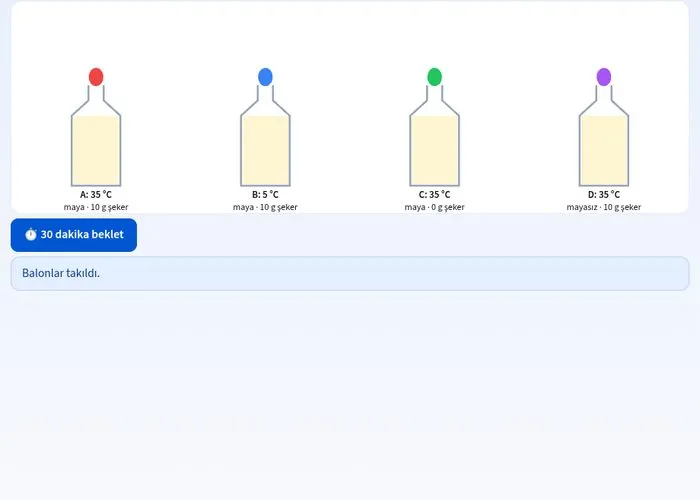
1.9 Fermentation
Fermentation experiment: attach balloons to bottles of yeast + sugar solution; effect of temperature and amount of sugar on CO₂ production; ethyl alcohol and lactic acid fermentation, yogurt, bread and muscle fatigue
Open Simulation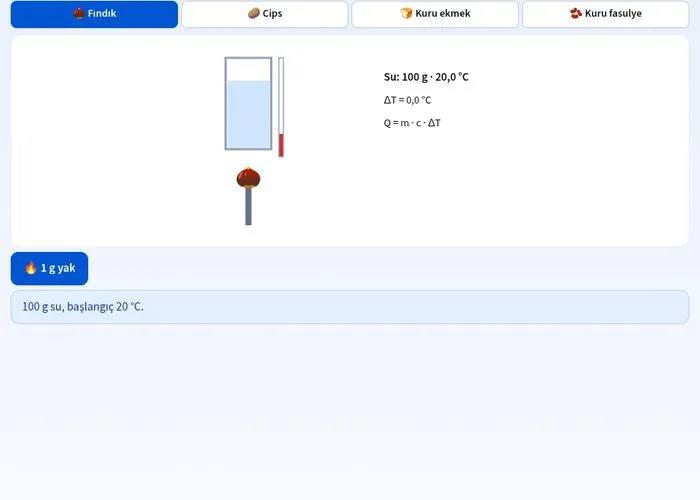
1.10 Energy-Metabolism Relationship
Food calorimeter: heat the water above by burning hazelnuts, chips, bread and dry beans; calculate the energy of 1 grams of food using Q = m·c·ΔT; basal metabolism and daily energy requirement
Open Simulation