Fermentation experiment: attach balloons to bottles of yeast + sugar solution; effect of temperature and amount of sugar on CO₂ production; ethyl alcohol and lactic acid fermentation, yogurt, bread and muscle fatigue
With the fermentation experiment simulation, you can observe carbon dioxide (CO₂) production by attaching balloons to the mouths of bottles containing yeast and sugar solution. This interactive tool allows you to explore the effect of temperature and sugar amount on the rate of fermentation within the scope of the energy theme in the 10th-grade biology course. While learning basic processes such as ethyl alcohol and lactic acid fermentation in a fun experimental environment, you can also examine daily life examples such as dough rising.
What can you do in this simulation?
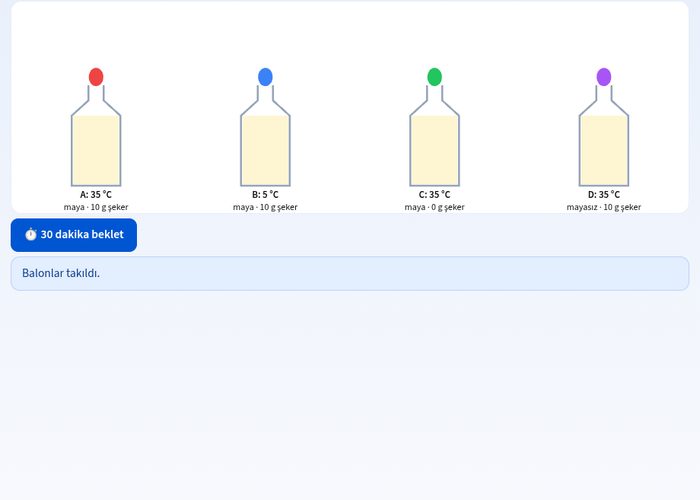
You can adjust the conditions (temperature and sugar amount) of four different bottles as you wish.
You can simulate a 30-minute fermentation process by attaching balloons to the mouths of the bottles.
You can observe how the CO₂ gas produced by yeast fungi consuming sugar inflates the balloons.
You can test your predictions against experimental results by answering the questions guided by the tutor.
You can try different parameter combinations again with the Start Over button.
Basic concepts and formulas
Fermentation is a type of anaerobic respiration that allows energy (ATP) to be produced by breaking down glucose with the help of enzymes. Living organisms such as yeast fungi perform ethyl alcohol fermentation and release carbon dioxide gas (CO₂) as a byproduct in this process. Its general equation is Glucose -> Ethyl Alcohol + CO₂ + ATP. Temperature and the initial amount of sugar directly affect the operating speed of yeast enzymes, determining the amount of gas production and the degree of balloon inflation.
How to use?
Determine the conditions and parameters of the four bottles from the experiment panel.
Attach balloons to the mouths of the bottles and start the 30-minute period.
Observe CO₂ production and the inflation status of the balloons.
Answer the questions guided by the tutor and check the results.
Frequently asked questions
Why does the balloon inflate during fermentation?
As yeasts break down sugar, they produce carbon dioxide (CO₂) gas as a byproduct. This gas rising up from the bottle causes the balloon attached to the mouth to inflate.
How does temperature affect the rate of fermentation?
The rate of fermentation increases up to the optimum temperature value where enzymes work best. Very high temperatures can denature enzymes and stop fermentation.
Which type of fermentation does this experiment belong to?
This simulation models the ethyl alcohol fermentation carried out by yeast fungi and the released CO₂ gas.
 Interactive experiment