Photosynthesis: In the Elodea (waterweed) experiment, measure the effect of light intensity, light color, CO₂ and temperature on O₂ bubble rate; light-dependent reactions and Calvin cycle model
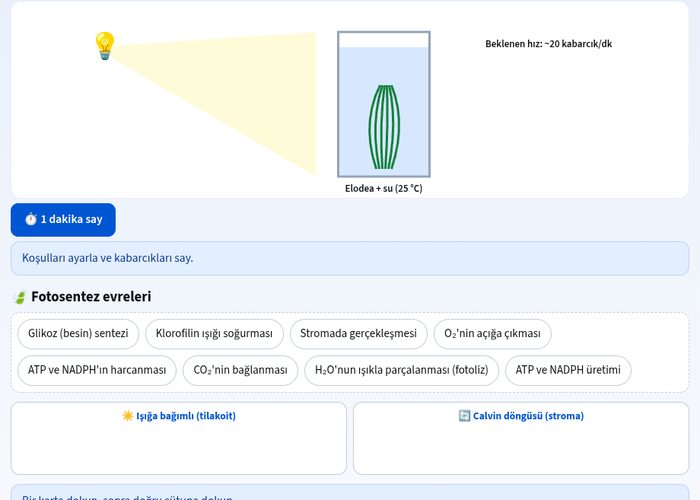
Explore interactively the role of light energy in nutrient synthesis with the photosynthesis simulation and observe the oxygen bubble rate. Thanks to this digital experiment, you can test factors affecting the rate of photosynthesis using Elodea aquatic algae and reinforce your theoretical knowledge in biology class.## What can you do in this simulation?- You can change parameters such as light intensity and light color (red, green, etc.).- You can measure the effect of temperature and the amount of CO₂ on the rate of photosynthesis.- You can track the rate of oxygen bubbles secreted by the Elodea plant with per-minute values.- You can answer guided questions about light-dependent reactions and the Calvin cycle.- You can make predictions via the experiment panel and check the results.## Key concepts and formulasPhotosynthesis is a metabolic process in which green plants convert carbon dioxide and water into glucose and oxygen using light energy. Its general equation is 6CO₂ + 6H₂O + Light Energy -> C₆H₁₂O₆ + 6O₂. The wavelength of light, temperature change, and the amount of carbon dioxide in the environment are limiting factors that directly affect the rate of photosynthesis.## How to use?- 1. Read the guide section to examine the purpose and rules of the experiment.- 2. Select factors such as light color, temperature, or CO₂ in the experiment panel.- 3. Adjust the values to observe changes in the bubble rate of the Elodea plant.- 4. Test your predictions by answering questions and record the results.## Frequently asked questions### Why are oxygen bubbles counted in the Elodea experiment?Oxygen bubbles directly indicate the amount of O₂ released as a result of photosynthesis reactions and, therefore, the rate of photosynthesis.### Why is the rate of photosynthesis low in green light?Since chlorophyll pigments largely reflect green light, the absorption rate is low at this color, and reactions slow down.### Does a temperature increase continuously increase photosynthesis?No, after the optimum temperature value, the structure of the enzymes deteriorates, so the rate of photosynthesis drops rapidly and may stop.
 Interactive experiment