Reaction quotient Q: adjust concentrations in the H₂ + I₂ ⇌ 2HI mixture, calculate Q and compare it with K to predict the direction in which the reaction will proceed; bring the system to equilibrium and verify the result
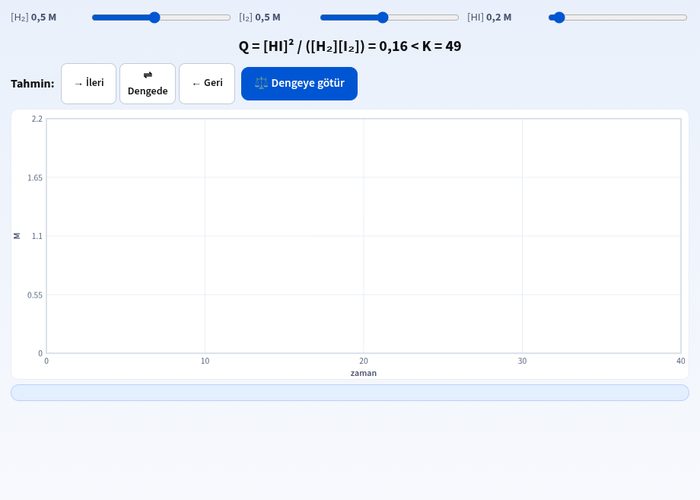
With this reaction rate simulation prepared to grasp the relationship between equilibrium and rate in chemistry, you can interactively examine the H2 + I2 ⇌ 2HI equilibrium. In this experiment, you will learn to adjust the concentrations of substances, calculate the reaction quotient (Q), compare this value with the equilibrium constant (K), and predict which direction the system will proceed. Suitable for the high school chemistry curriculum, this tool is a wonderful opportunity for you to understand how the equilibrium position changes in chemical reactions.
What can you do in this simulation?
You can change the initial concentrations of H2 and I2 substances via the experiment panel.
You can make predictions by calculating the reaction quotient (Q) and comparing it with the equilibrium constant.
You can observe how the system reaches equilibrium and check your calculations.
You can answer questions and collect points by progressing step by step with the guidance.
You can reset the experiment with the restart button and retry different concentration scenarios.
Basic concepts and formulas
The ratio of concentrations at any given moment in chemical reactions is called the reaction quotient or reaction rate (Q). For the H2 + I2 ⇌ 2HI equilibrium, the expression for Q is written as Q = [HI]^2 / ([H2] · [I2]). If Q < K, the reaction shifts toward the products (right); if Q > K, it shifts toward the reactants (left); if Q = K, the system is at equilibrium.
How to use?
Open the experiment screen and follow the guide's instructions to examine the initial concentrations.
Place the cards or relevant values by dragging and dropping them into the boxes on the screen or by tapping.
Save your prediction, complete your calculations, and press the check button.
Evaluate the results, and test different scenarios by using the restart button when necessary.
Frequently asked questions
What is the difference between the reaction quotient (Q) and the equilibrium constant (K)?
K gives the ratio of concentrations at the moment the system reaches equilibrium, while Q shows the ratio of concentrations at any non-equilibrium moment.
What happens if the Q value is greater than the K value?
A Q > K condition indicates that the product concentration is excessive relative to the equilibrium position, and the reaction shifts toward the reactants to try to reach equilibrium.
What topics does this simulation cover?
The simulation covers the topics of factors affecting equilibrium and reaction rate, which are included in the 11th-grade chemistry curriculum under the 2st theme of diversity.
 Interactive experiment