Dangers of electric current: add a device to a house circuit with a 16 A fuse (P = V·I), see the fuse blow under overload; effects of current on the human body and safety rules
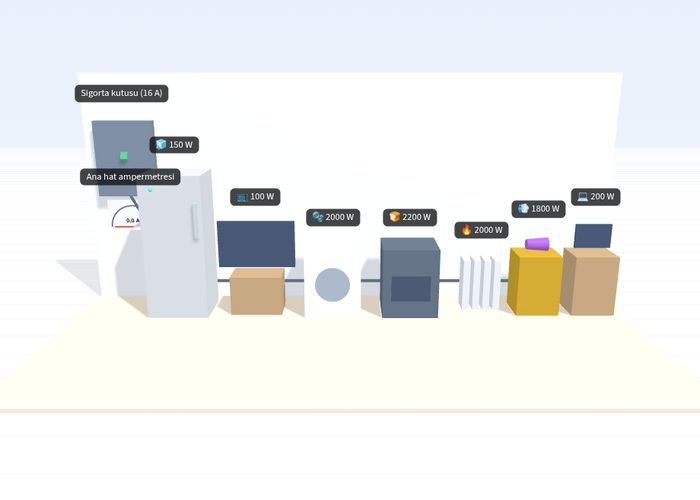
Discover how safety is ensured in domestic electrical circuits with the dangers of electric current and precautions simulation. In this interactive experiment, you will calculate power by adding appliances like a refrigerator to a 16 A fused home circuit and observe how the fuse cuts off the circuit in case of an overload.
What can you do in this simulation?
You can observe the total power and current by adding different household electrical appliances to home circuits.
Using the P = V·I formula, you can cause the fuse to blow in situations exceeding the 16 A limit.
After an overload causes the fuse to blow, you can turn off the devices and reset the fuse to make the system run safely again.
You can reinforce vital safety rules such as electric shock, wet environments, and outlet safety through interactive questions.
Basic concepts and formulas
Ohm's law and power relations form the basis of working safely in electrical circuits. Voltage is generally constant in home circuits (V = 220 V). As the total power increases, the current drawn from the circuit also increases:
P = V·I
Here P is power (Watts), V is voltage (Volts), and I is current (Amperes). Fuses are protection elements that prevent fires and accidents by automatically cutting off the circuit when the current exceeds a certain limit (for example, 16 A).
How to use?
Add devices to the home circuit by following the instructions given on the experiment panel.
Monitor the total power and current value to check whether the fuse limit has been exceeded.
When the fuse blows, examine the error message and reset the system by reducing the load.
Complete the test by placing the safety rules and behavior cards into the correct boxes.
Frequently asked questions
Why does a fuse blow?
When the total power of the devices connected to the circuit exceeds the maximum current limit that the fuse can carry, the fuse wire heats up and automatically cuts off the circuit.
Why is it dangerous to touch electricity with wet hands?
Water significantly lowers the body's resistance; decreased resistance causes a higher current to pass through the body and intensifies the electric shock.
Why should a thick wire not be connected in place of a blown fuse?
Since a thick wire will withstand higher currents, it will not cut off the current during an overload; this can lead to overheating of the cables and house fires.
 Interactive experiment