Theme 1: Life
grade 9 biology · theme 1
1.1 Importance of Biology and Development of the Science of Biology
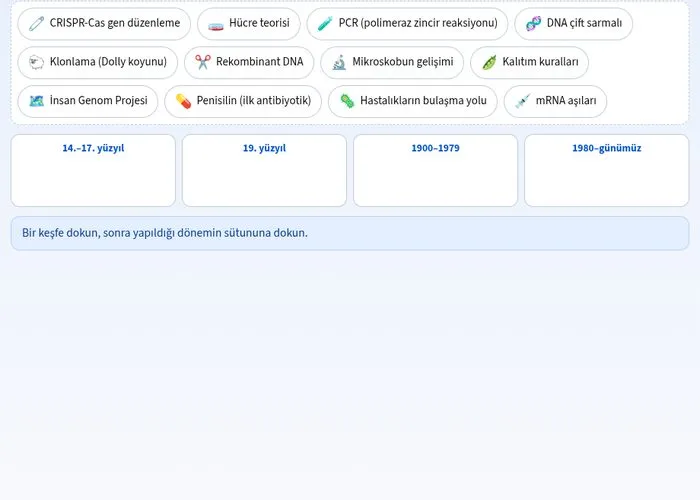
Turning points of biology from Akşemseddin to CRISPR: timeline, contributions of discoveries to humanity, application areas of biology
Open Simulation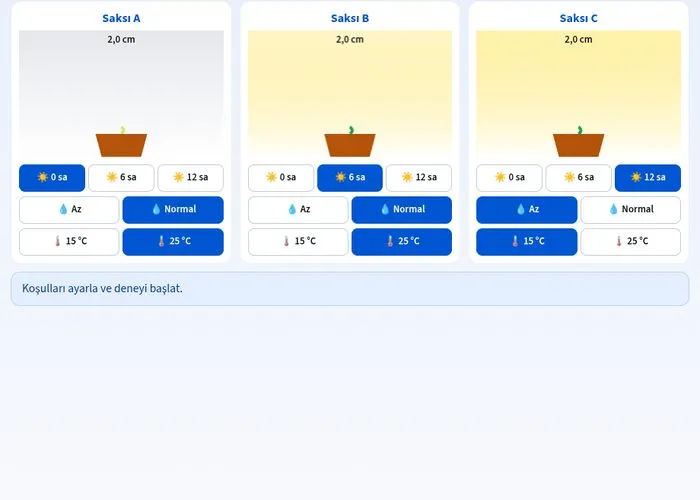
1.2 Nature of Science and Scientific Inquiry Processes
Nature of science and scientific method: observation–inference, hypothesis, dependent/independent/control variables; design a controlled experiment with potted plants and graph the data
Open Simulation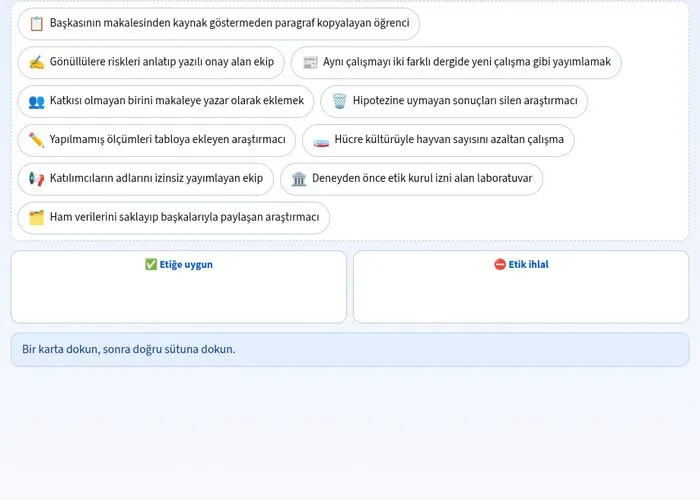
1.3 Ethics in Science
Science ethics: plagiarism, fabrication and falsification of data, informed consent, the 3R principles in animal experiments, ethics committee; evaluate research scenarios
Open Simulation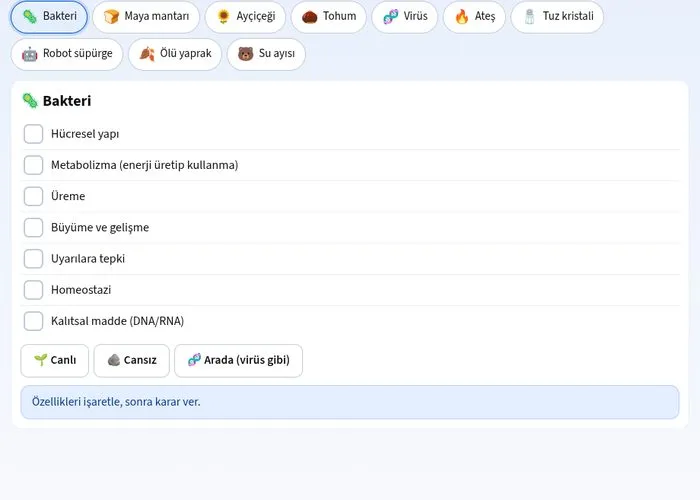
1.4 Common Characteristics of Living Things
Common characteristics of living things: cellular structure, metabolism, reproduction, homeostasis, response to stimuli… examine the 10 example feature by feature; why are viruses between living and non-living?
Open Simulation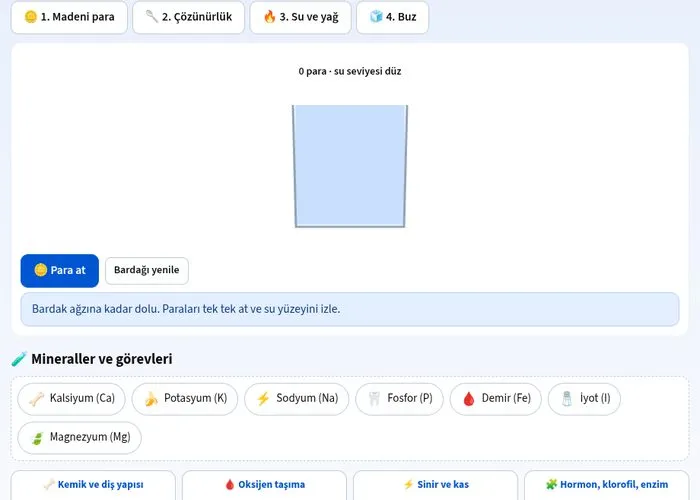
1.5 Inorganic Molecules
Water and minerals: surface tension with a coin, solubility test, water–oil heating experiment (high specific heat), floating ice; functions of minerals
Open Simulation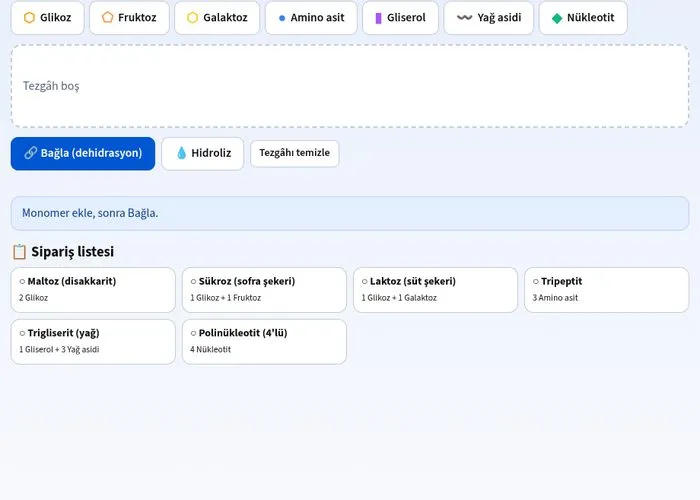
1.6 Organic Molecules
Molecule workshop: link monomers via dehydration synthesis, separate them via hydrolysis; carbohydrates, lipids, proteins, nucleic acids, enzymes, and vitamins
Open Simulation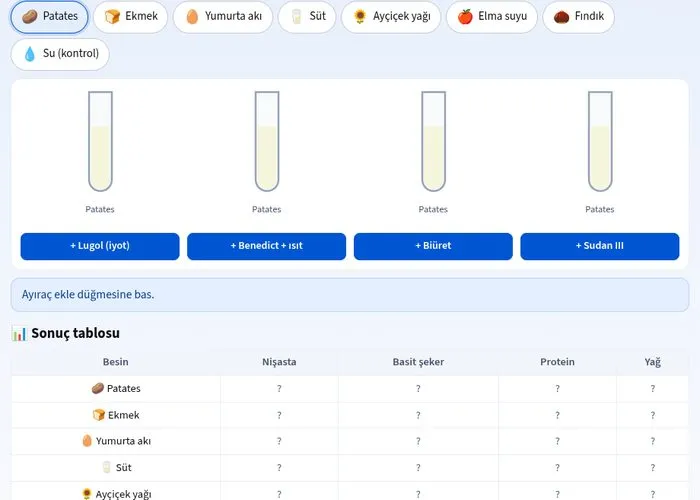
1.7 Identification of Carbohydrates, Lipids, and Proteins in Foods
Virtual laboratory: add Lugol's, Benedict's (by heating), Biuret, and Sudan III reagents to foods; determine the presence of starch, sugar, protein, and fat from color changes
Open Simulation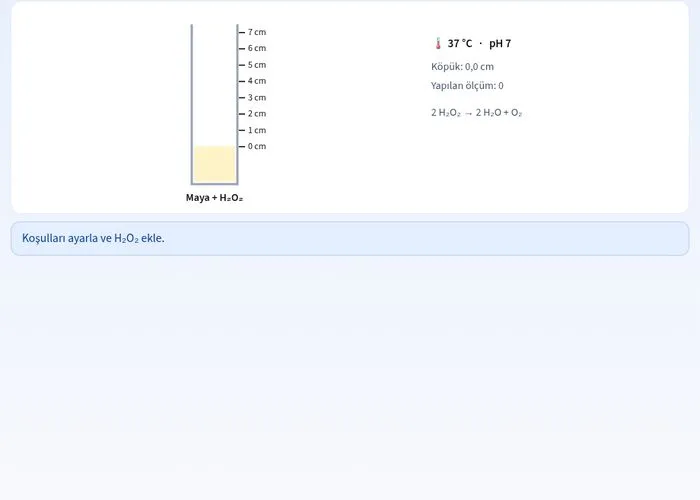
1.8 Effect of pH and Temperature on Enzyme Activity
Catalase experiment: yeast + hydrogen peroxide → foam (O₂). Change temperature and pH, measure foam height, plot the enzyme activity graph; control with boiled yeast
Open Simulation