Unit 4: Waves
grade 10 physics · unit 4
4.1 Periodic Motions
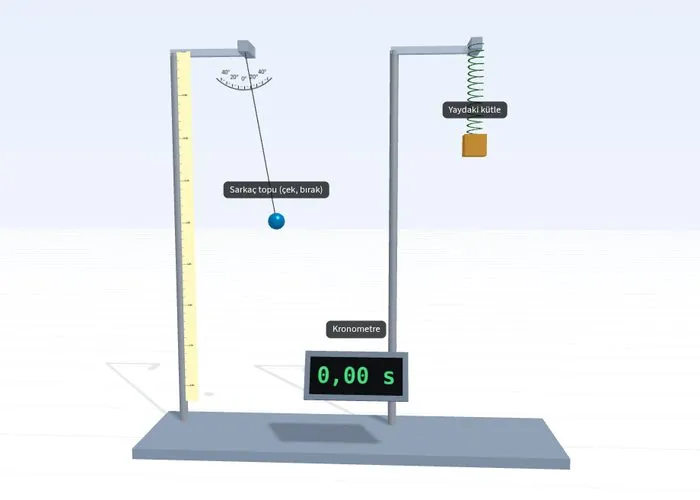
Periodic motion: measure the effect of string length, mass, and amplitude on the period in a simple pendulum, and mass and spring constant in a mass-spring system; T–L and T²–L graphs
Open Simulation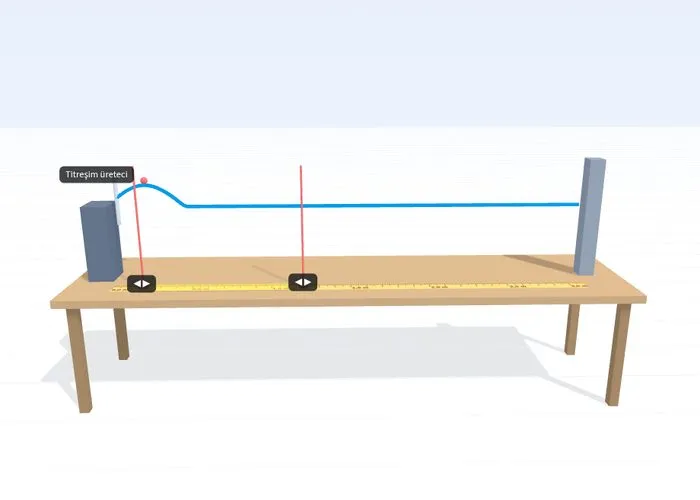
4.2 Basic Concepts of Waves
Basic concepts of waves: create a wave on a string, change frequency and amplitude; measure wavelength with a ruler, count period, verify the relation v = λ·f; crest, trough, amplitude
Open Simulation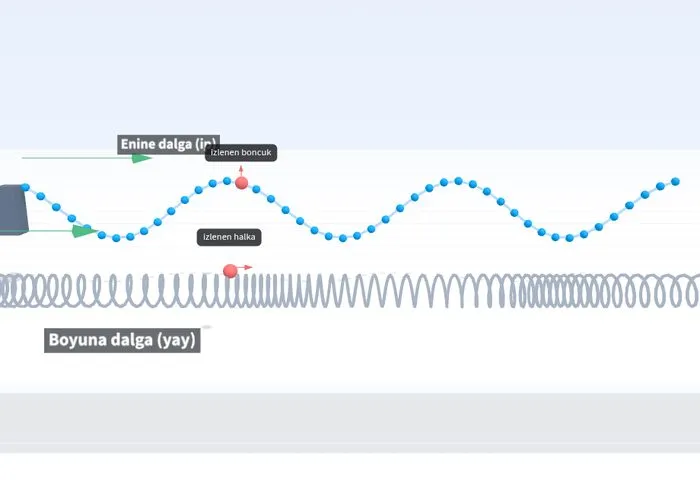
4.3 Classification of Waves
Classification of waves: observe transverse (string) and longitudinal (spring) waves side by side; mechanical and electromagnetic waves; classify examples of waves propagating in one, two, and three dimensions
Open Simulation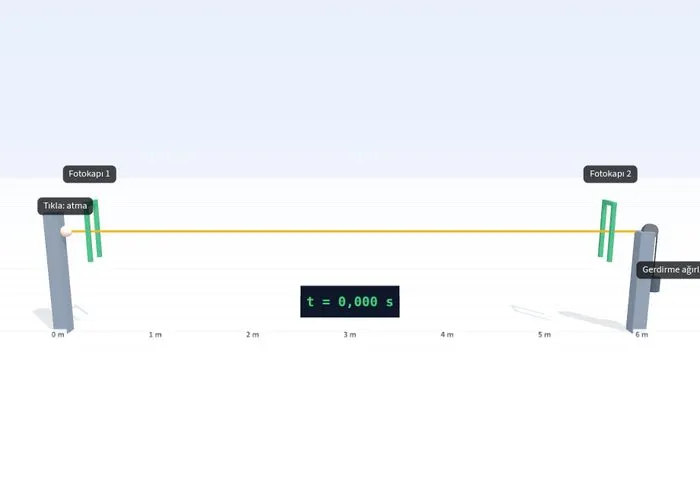
4.4 Factors Affecting the Propagation Speed of Waves
Factors affecting wave speed: change the speed of a pulse on a string using tension and mass per unit length, find the relation v = √(F/μ) by measuring; speed of sound in different mediums
Open Simulation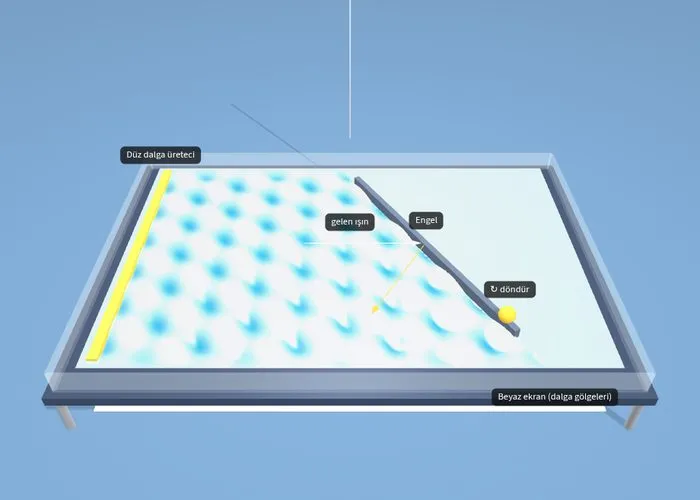
4.5 Reflection and Refraction in Water Waves
Ripple tank: angle of incidence and angle of reflection in the reflection of linear water waves from an obstacle; decrease in speed and wavelength, constancy of frequency, and refraction when passing from a deep region to a shallow region
Open Simulation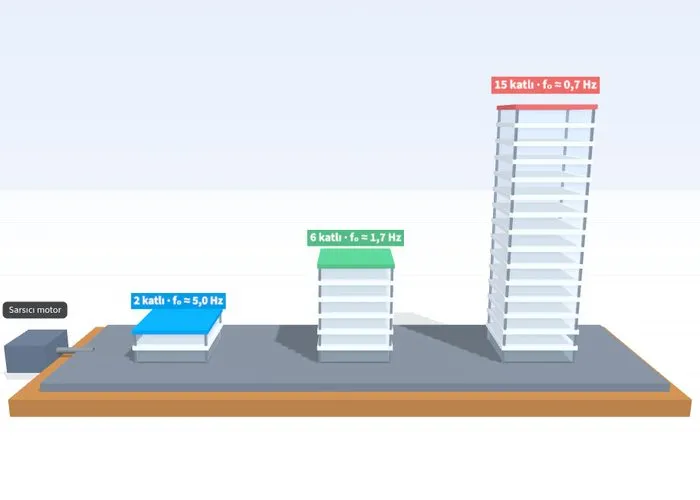
4.6 Resonance and Earthquakes
Resonance and earthquakes: find the natural frequencies of buildings of different heights on a shake table, see the increase in amplitude at resonance; calculate the distance to the earthquake epicenter from the arrival time difference between P and S waves
Open Simulation