Waste management: sort waste into the correct bin (paper, plastic, glass, metal, organic/compost, hazardous), rank decomposition times in nature, zero waste hierarchy
You can develop environmental awareness, learn to sort waste into the correct bins, and master the zero-waste hierarchy with the waste management simulation. This interactive experiment allows you to reinforce ecology topics and acquire sustainable habits in daily life. You can discover the decomposition times of paper, plastic, glass, metal, organic, and hazardous waste in nature.
What can you do in this simulation?
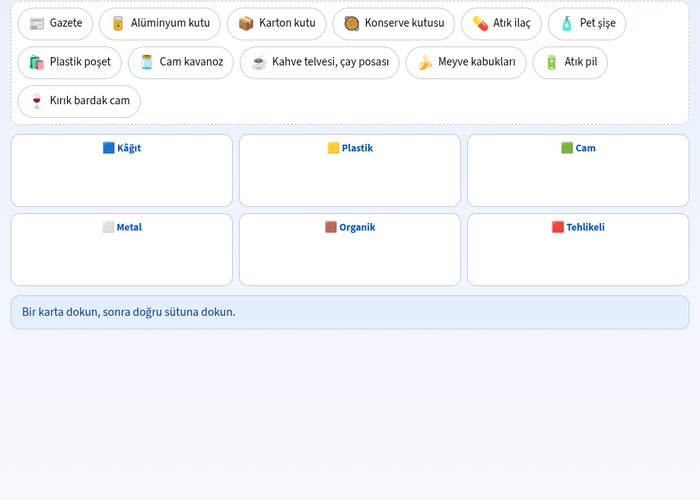
You can examine different materials such as plastic bottles, glass jars, aluminum cans, banana peels, and waste batteries.
You can place cards into their correct recycling bins by dragging and dropping or by tapping.
You can rank the decomposition times of wastes in nature (banana peel 2–10 weeks, paper 2–6 months, cigarette butt 1–12 years, aluminum can 80–200 years, plastic bottle ~450 years, glass bottle ~1 million years).
You can explore the zero-waste hierarchy and learn the steps of waste prevention, recycling, and landfill disposal.
You can reinforce your learning by testing your predictions with mentor guidance and receiving instant feedback.
Basic concepts and formulas
Waste management aims to sort waste at the source to protect natural resources and prevent environmental pollution. The zero-waste hierarchy basically consists of the following steps: Waste prevention (reduction), reuse, recycling, and disposal as a last resort. Decomposition times in nature vary depending on the chemical structure of materials; for example, organic substances blend into nature in a short time, while inorganic substances like plastic and glass can remain in nature for hundreds or even millions of years.
How to use?
Go to the experiment panel and examine the waste cards on the screen.
Tap on a card and then tap on the correct recycling bin or column it belongs to.
Use the check button after placing all wastes into the correct categories.
Return to the questions you missed or got wrong and repeat the experiment from the beginning.
Frequently asked questions
What does the waste management simulation teach?
This simulation interactively teaches the types of household and hazardous waste, how to dispose of them in the correct recycling bins, and their decomposition times in nature.
What is the zero-waste hierarchy?
The zero-waste hierarchy is an environmental approach advocating for the prevention of waste generation from the very beginning (prevention), followed by reuse and recycling processes in order.
How long does it take for plastic and glass bottles to decompose in nature?
While plastic bottles decompose in about 450 years, it takes glass bottles approximately 1 million years to degrade in nature.
 Interactive experiment