Theme 2: Ecology
grade 10 biology · theme 2
2.1 Components of the Ecosystem
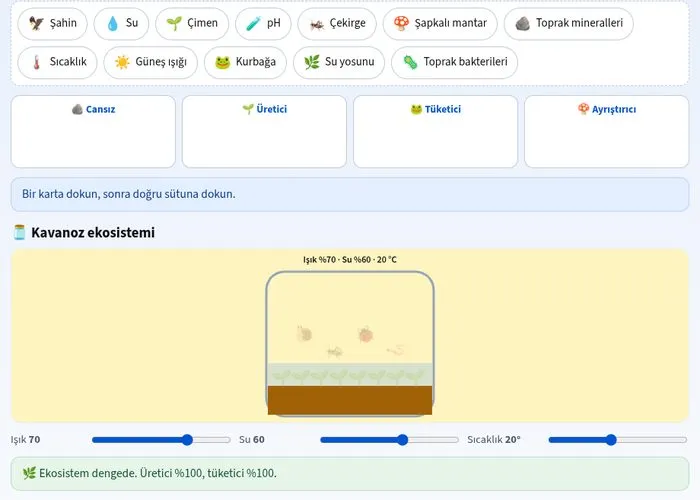
Components of the ecosystem: separate biotic (producer, consumer, decomposer) and abiotic components; change light, water and temperature in a closed jar ecosystem and observe the reaction of living things
Open Simulation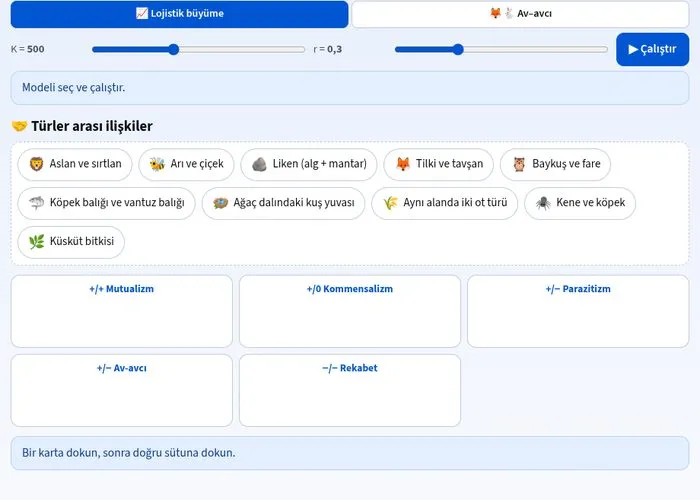
2.2 Interactions and Changes in Communities and Populations
Population and community: logistic growth approaching carrying capacity, rabbit–fox predator-prey cycles; classify mutualism, commensalism, parasitism, competition and predator-prey relationships
Open Simulation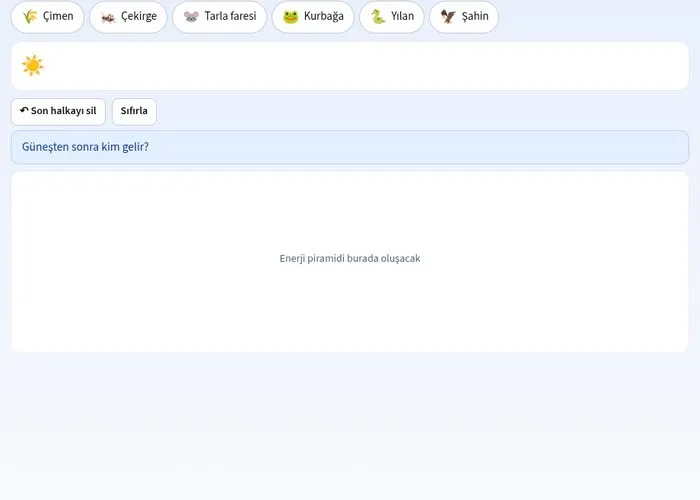
2.3 Matter and Energy Flow in the Ecosystem
Food chain and energy flow: build a food chain in a grassland ecosystem, see in the energy pyramid that ~10% of the energy is transferred at each step; food web and biological accumulation
Open Simulation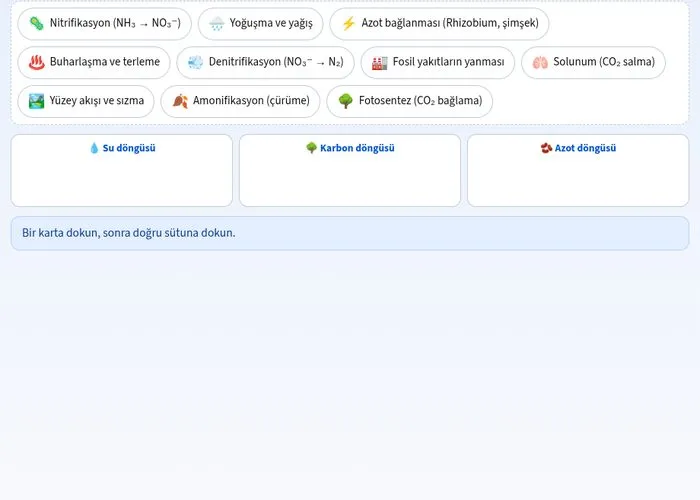
2.4 Matter Cycles
Matter cycles: place the processes in water, carbon and nitrogen cycles into the correct cycle and stage; simulate the effect of fossil fuel use on atmospheric CO₂ in the carbon cycle
Open Simulation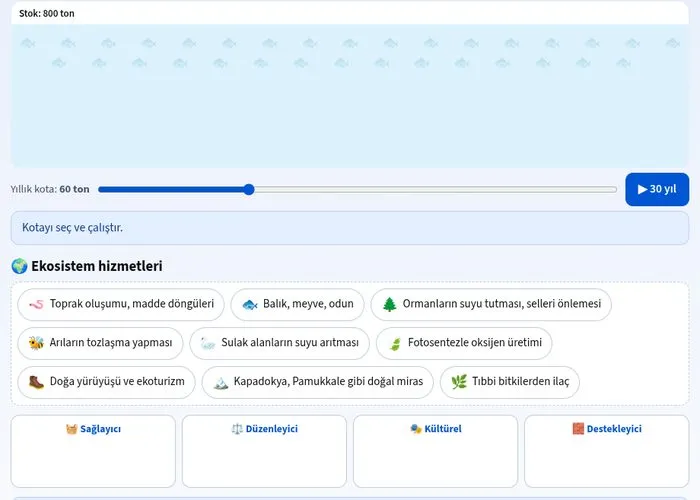
2.5 Importance of Ecological Sustainability
Ecological sustainability: set the annual catch quota in the fish stock simulation; discover that overfishing leads to collapse and maximum sustainable yield (MSY); ecosystem services
Open Simulation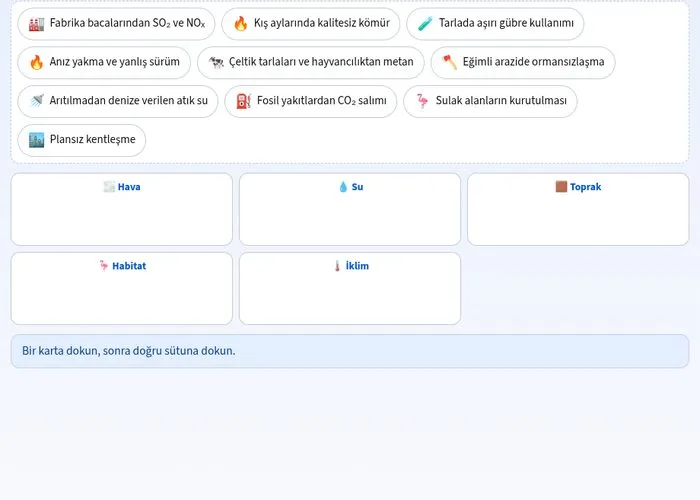
2.6 Conditions Limiting Ecological Sustainability
Conditions limiting ecological sustainability: air, water and soil pollution, erosion, habitat loss, climate change; cause–effect matching and 1960–2024 atmospheric CO₂ and temperature data
Open Simulation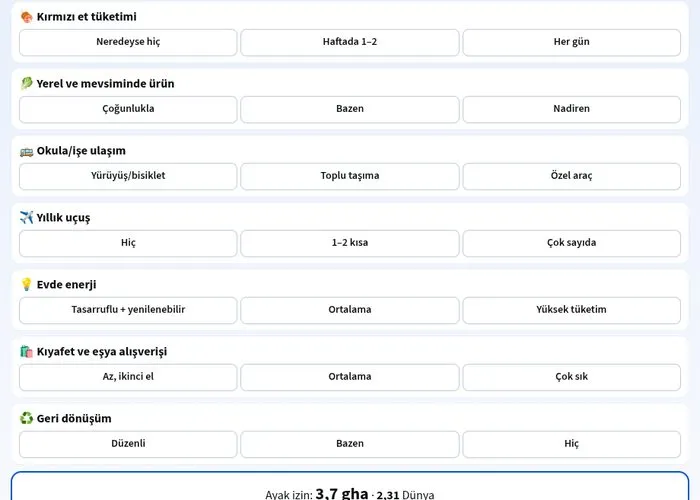
2.7 Reducing Ecological Footprint
Ecological footprint calculator: select nutrition, transportation, energy and consumption habits; see the global hectares and 'how many Earths are needed' result; try choices that shrink your footprint
Open Simulation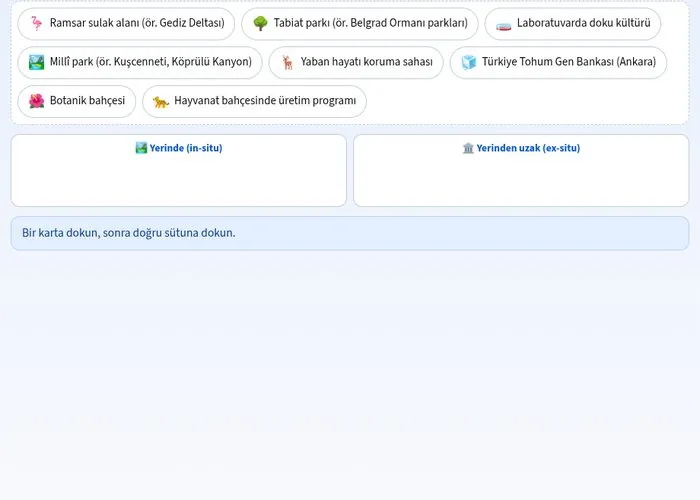
2.8 Conservation of Natural Resources and Biodiversity
Conservation of natural resources and biodiversity: in-situ and ex-situ conservation; national park, nature park, wildlife sanctuary, seed gene bank; examples from Turkey
Open Simulation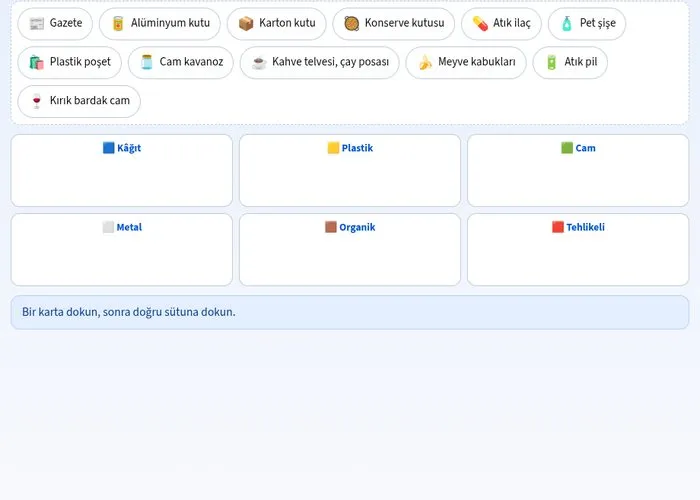
2.9 Waste Management
Waste management: sort waste into the correct bin (paper, plastic, glass, metal, organic/compost, hazardous), rank decomposition times in nature, zero waste hierarchy
Open Simulation