Conditions limiting ecological sustainability: air, water and soil pollution, erosion, habitat loss, climate change; cause–effect matching and 1960–2024 atmospheric CO₂ and temperature data
Explore environmental issues such as air, water, and soil pollution, erosion, and climate change with the simulation of conditions restricting ecological sustainability. You can interactively learn how ecological balance is disrupted by establishing cause-and-effect relationships regarding nature. This experiment is a great digital resource for high school and university students wishing to reinforce ecology topics.
What can you do in this simulation?
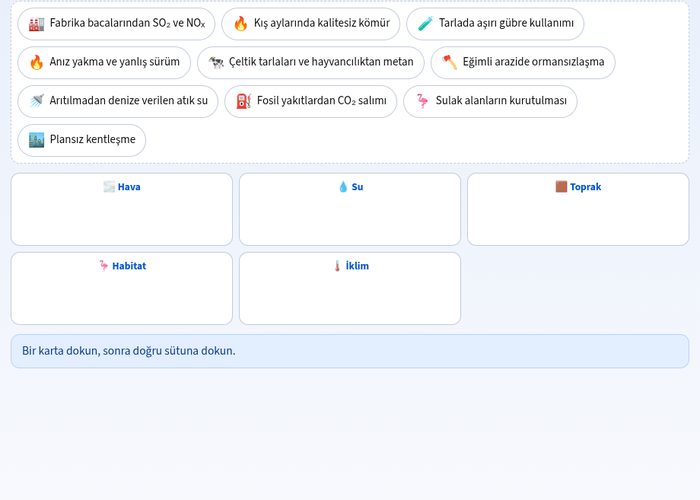
You can place 10 different ecological problems into the correct categories and columns.
You can examine the effects of SO₂ and NOₓ gases emitted from factory chimneys and excessive fertilizer use in the field.
You can match the causes of wastewater discharged into the sea without treatment and the formation of mucilage.
You can test the relationship between practices such as deforestation and stubble burning on sloped terrain with erosion.
You can analyze the graphs showing atmospheric CO₂ increase and temperature data from 1960 to the present.
Basic concepts and formulas
Ecological sustainability is the use of natural resources without endangering the needs of future generations. Excessive consumption of fossil fuels triggers the greenhouse effect and global warming by increasing the amount of CO₂ released into the atmosphere. Agricultural wastes and untreated waters accelerate the eutrophication (algal bloom) process in water bodies, threatening aquatic life.
How to use?
Examine the cards and problems by following the instructions on the screen.
Tap a card or drag and drop it to place it in the correct box or column it belongs to.
After filling all the blanks, press the "Check" button to test your answers.
Interpret the CO₂ and temperature change data by examining the two graphs.
Frequently asked questions
What are the most important factors restricting ecological sustainability?
Fossil fuel use, rapid population growth, industrial pollution, habitat loss, and unconscious agricultural practices are the main factors disrupting ecological balance.
What is eutrophication and why does it occur?
It is the condition where algae proliferate excessively as a result of nutrient elements such as nitrogen and phosphate filling into water due to agricultural fertilizers and domestic wastes mixing into water bodies.
How does deforestation affect climate change?
Forests act as carbon sinks, balancing the proportion of CO₂ in the atmosphere; deforestation leads to the accumulation of this gas and accelerates global warming.
 Interactive experiment