Unit 1: Force and Motion
grade 11 physics · unit 1
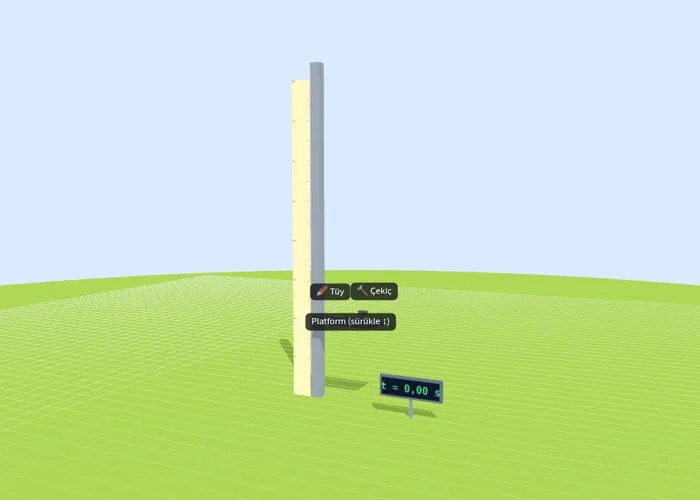
1.1 Free Fall
Free fall: drop a feather and a hammer in air and in vacuum; measure fall times from different heights and find the acceleration due to gravity with g = 2h/t²; falling on the Moon and Mars; velocity–time graph
Open Simulation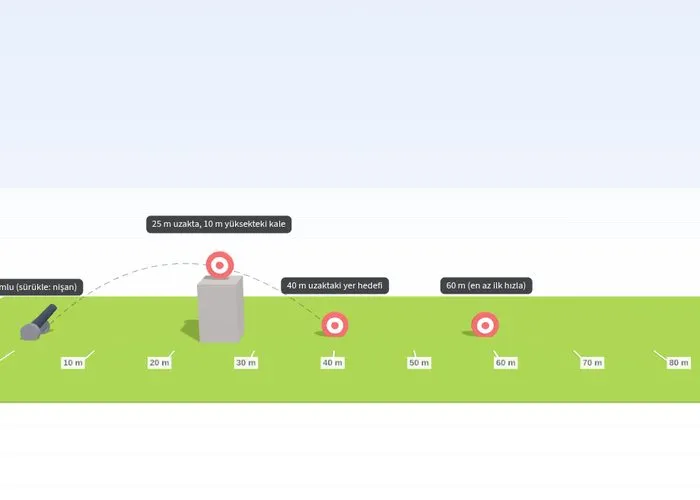
1.2 Motion with Constant Acceleration in Two Dimensions
Motion in two dimensions: cannon shot with adjustable launch angle, initial velocity, and height; trajectory, flight time, range, and maximum height in horizontal and projectile motion; hitting a target and discovering the maximum range at 45°
Open Simulation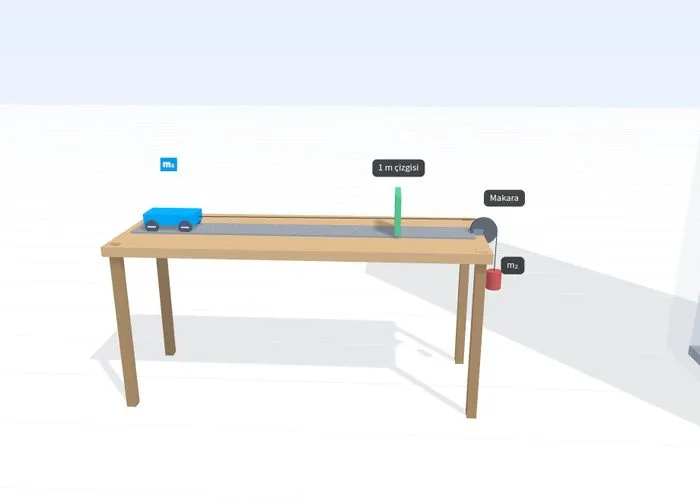
1.3 Newton's Laws of Motion
Newton's laws of motion: pull the cart on the table with a suspended mass; calculate and measure acceleration and string tension with F = m·a; weight variation shown by a scale in an elevator due to acceleration (action–reaction)
Open Simulation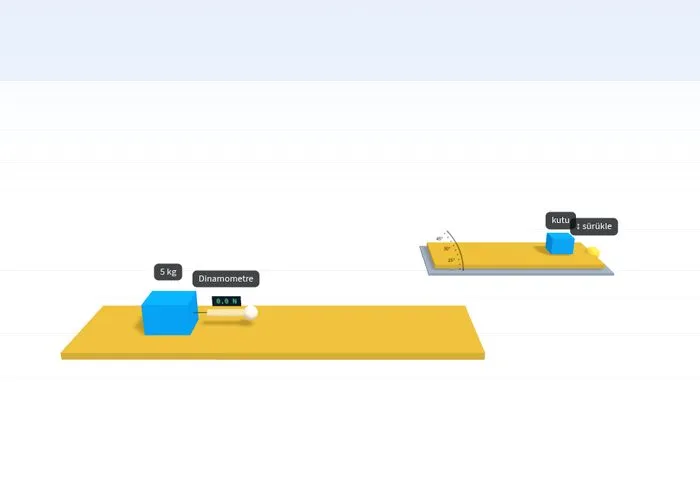
1.4 Friction Force
Friction force: pull the box with increasing force and see the drop from static to kinetic friction on the graph; find the friction coefficient with μs = tan θ from the critical angle where sliding begins by increasing the incline angle; compare surface pairs
Open Simulation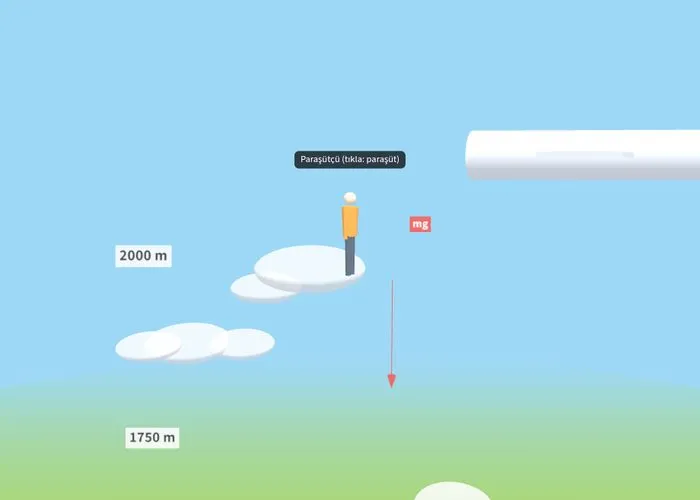
1.5 Terminal Velocity
Terminal velocity: adjust skydiver's mass and parachute area; observe the velocity–time graph approaching terminal velocity with air drag F = k·v²; deceleration and safe landing speed when the parachute opens
Open Simulation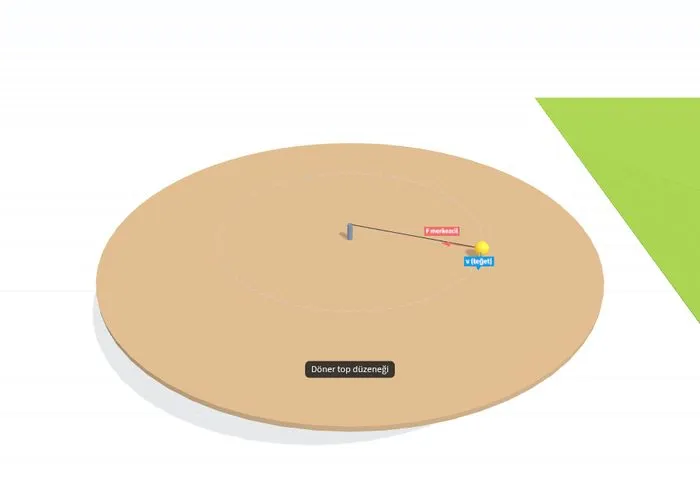
1.6 Uniform Circular Motion
Uniform circular motion: whirl a ball attached to a string; calculate centripetal force with F = mv²/r using radius, velocity, and mass; tangential motion of the ball when the string is cut; maximum safe speed that friction can provide on a curve
Open Simulation