Energy sources: separate renewable and non-renewable sources; meet the electricity demand of a city with a population of 1 million using solar, wind, hydroelectric, geothermal, natural gas, and coal, meet CO₂ and cost targets
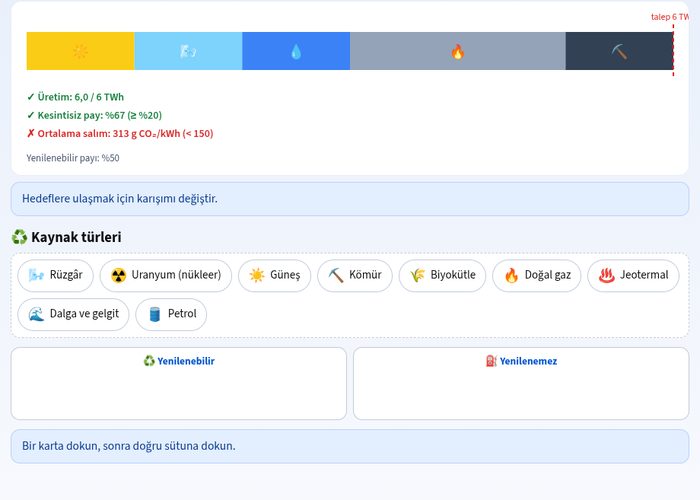
Discover renewable and non-renewable energy types with the energy sources simulation, and meet the electricity demand of 6 TWh for a fictional city with a population of 1 million. In this interactive experiment, you will learn to hit CO2 emission and cost targets by correctly categorizing sources such as solar, wind, hydroelectric, geothermal, natural gas, and coal. ## What can you do in this simulation? - You can classify 9 different energy sources as renewable and non-renewable. - You can drag and drop solar, wind, hydroelectric, geothermal, natural gas, and coal cards into their respective boxes. - You can create the energy mix that will meet the city's 6 TWh electricity demand. - You can build a sustainable city plan by simultaneously achieving the renewable energy share, average CO2 emission, and cost targets. - You can check the correct answers with the guidance of the guide and see your shortcomings. ## Basic concepts and formulas While generating energy, sustainability, cost, and environmental impact (especially carbon emissions) must be balanced. While renewable sources (solar, wind, geothermal, hydroelectric) are inexhaustible in nature, fossil fuels (coal, natural gas) cause high CO2 emissions. Total production must meet the demand, and uninterrupted share optimization must be performed: Production = Demand (6 TWh). ## How to use? 1. Familiarize yourself with the 9 energy source by examining the guide and experiment panel. 2. Place the cards into the correct boxes and columns by touching or dragging and dropping them. 3. Bring the total production to the 6 TWh target by selecting energy sources on the city plan screen. 4. Hit the budget and environmental targets by checking CO2 emission and cost indicators. 5. Evaluate the results; if you made a mistake, go back to the steps and renew your plan. ## Frequently asked questions ### What are renewable energy sources? They are energy sources such as solar, wind, hydroelectric, and geothermal that are inexhaustible in nature and do not harm the environment. ### Why are CO2 and cost targets important in the city plan? Fossil fuels may be cheap but create high carbon emissions; renewable sources are environmentally friendly, but continuity and cost balance must be observed. ### What happens if production does not meet demand? When the city's electricity need (6 TWh) is not met, the system will have a deficit and a sustainable energy plan will not have been established.
 Interactive experiment