Transformation of electrical energy: see what energy electrical energy is converted into in an iron, lamp, fan, and charger; compare power plant types with their advantages and disadvantages; calculate monthly energy consumption and bill from the power and usage time of devices
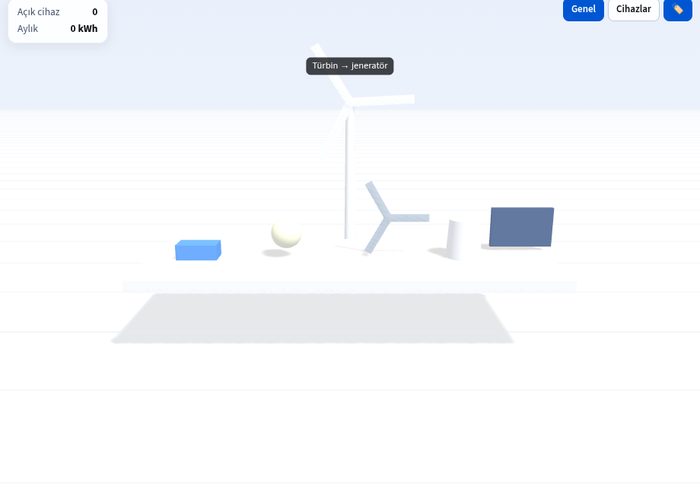
Discover what types of energy the devices we use in daily life convert electrical energy into with the electrical energy transformation simulation. You can learn energy transformation processes interactively by examining the working principles of common home appliances such as irons, LED lamps, fans, water heaters, and televisions. In addition, you can gain comprehensive information about the generation sources of electrical energy by comparing the advantages and disadvantages of hydroelectric, thermal, wind, solar, and nuclear power plants.
What can you do in this simulation?
You can observe how devices such as irons, lamps, fans, water heaters, and televisions convert electrical energy into heat, light, motion, and sound energy.
By examining hydroelectric, thermal, wind, solar, and nuclear power plants, you can compare each one's energy sources, advantages, and environmental impacts.
You can test your knowledge by dragging and dropping cards into appropriate boxes and columns, and reach the correct answers with the guide.
You can examine the monthly energy consumption of devices and estimated electricity bill calculations using power and usage time parameters.
Basic concepts and formulas
Electrical energy is converted into different types of energy through devices. For example, in resistive devices, electrical energy is converted into heat (E = P·t), and in motorized devices, it is converted into motion energy. When calculating energy consumption, power (P) is multiplied by usage time (t): E = P·t.
How to use?
Open the simulation screen and examine the energy conversion tasks presented with the guide.
Place the cards into the relevant device, energy type, or power plant boxes by touching or dragging and dropping them.
Operate the devices and track on the screen which energy conversions they perform.
Read the characteristics of plant types and compare their advantages and disadvantages.
Frequently asked questions
What type of energy do irons and water heaters convert electrical energy into?
These devices mainly convert electrical energy into heat energy, enabling water to boil or clothes to be ironed.
What are renewable energy power plants?
Wind, solar, and hydroelectric power plants are among renewable energy sources; their carbon emissions are low, but they can depend on natural conditions.
Which values are used when calculating the electricity bill?
The consumed energy (kWh) is calculated by multiplying the electrical power of the devices in kilowatts (kW) by the usage time in hours (h), and then the amount is found by multiplying by the unit price.
 Interactive experiment