Place an Erlenmeyer flask with hot water into a beaker with cold water: equilibrium temperature, heat gained = heat lost; effect of mass, substance type, and initial temperature (3D)
Discover how substances with different temperatures exchange heat when brought together with the thermal equilibrium simulation. Through this interactive activity, you will reinforce the topics of thermodynamics and heat in the 9th grade physics course, and observe heat transfer between substances such as hot and cold water or olive oil. With the thermal equilibrium experiment, you can interactively examine the effect of mass, type of substance, and initial temperature on the final equilibrium temperature.
What can you do in this simulation?
You can set up the initial setups by placing the Erlenmeyer flask with hot water into the beaker with cold water.
You can see the effect of heat capacity on the equilibrium temperature by changing the mass of the water in the Erlenmeyer flask.
You can test the effect of different substance types on thermal equilibrium by using olive oil in the Erlenmeyer flask.
You can answer questions with the guidance of the mentor, test your predictions with the experiment, and get instant feedback.
You can examine the relationship between the heat gained and the heat lost by following the heat transfer process step by step.
Basic concepts and formulas
Thermal equilibrium is the phenomenon where two or more substances with different temperatures are brought together, heat exchange occurs between them, and this exchange continues until the temperatures equalize. In an insulated system, the heat given off by the hot body equals the heat absorbed by the cold body: Q_given = Q_gained. Heat change is calculated using the formula Q = m·c·ΔT; where m denotes mass, c specific heat, and ΔT temperature change.
How to use?
Open the simulation screen and examine the substances in the initial setup (e.g., 200 g / 20 °C and 100 g / 60 °C).
Follow the mentor's directions to record your prediction and start the experiment.
Try different scenarios by changing the mass or substance type of the water in the Erlenmeyer flask.
Answer the questions, and reinforce your knowledge by reading the explanations following correct and incorrect answers.
Frequently asked questions
Is the thermal equilibrium temperature always the exact average of the two initial temperatures?
No, the equilibrium temperature is not always the exact average. If the heat capacities (m·c values) of the mixing substances are not equal to each other, the equilibrium temperature will be closer to the initial temperature of the substance with the larger heat capacity.
When does heat flow stop?
Heat flow continues until the temperatures of the substances in contact equalize. When the temperatures become equal, thermal equilibrium is reached and net heat transfer stops.
Why are the heat gained and the heat lost equal to each other?
Since there is no heat loss to the outside or heat gain from the outside in an insulated system, all the heat lost by the hot body is absorbed by the cold body. This is a consequence of the law of conservation of energy.
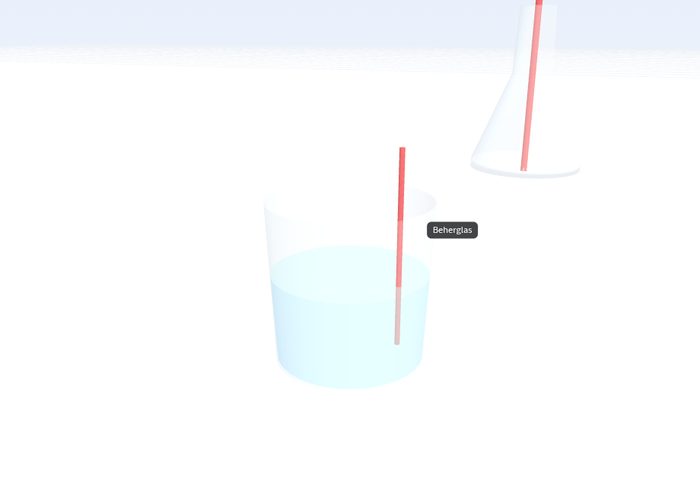 Interactive experiment