Microplastics and nanoplastics: observe the breakdown of a plastic bottle over the years by sun and waves on a timeline; compare degradation times of plastic types in nature; classify microplastic sources and select reduction methods
Explore the destructive journey of plastic waste in nature and its environmental impacts with the microplastics and nanoplastics simulation. In this interactive experiment, you will watch how a plastic bottle breaks down over the years with sun and waves on a timeline, classify microplastic sources, and choose the right reduction ways to protect nature.
What can you do in this simulation?
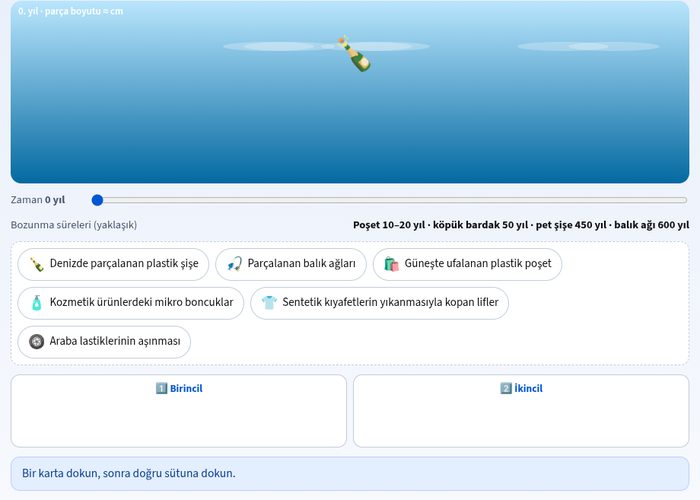
You can step by step watch the piece size change of a discarded bottle over the years and its degradation process in nature by using the time slider.
You can classify microplastic sources (such as synthetic clothing fibers, tire wear, cosmetic microbeads, and fishing nets) by dragging and dropping them into the relevant categories.
You can choose the right behaviors that require a sense of responsibility, such as using cloth bags, washing in a filtered bag, and recycling plastics.
You can test your predictions with experimental results by answering the guided questions and get instant feedback.
Basic concepts and formulas
Microplastics are plastic particles smaller than 5 millimeters in size, while nanoplastics are much smaller structures below 1 micrometer. The degradation time of plastics in nature depends on photolysis (breakdown by sunlight), mechanical abrasion, and hydrolysis processes. Large plastics break into smaller pieces over time due to the breaking of polymer chains under ultraviolet rays, but they do not disappear completely.
How to use?
Observe the transformation and piece size of the plastic bottle over the years by advancing the slider in timeline mode.
Place the microplastic sources into the correct boxes by tapping or dragging and dropping cards.
Complete the quiz by choosing the correct consumer behaviors and reduction methods in sustainability steps.
Check the steps you got wrong or missed with guide hints and restart the experiment from the beginning.
Frequently asked questions
How do microplastics form in nature?
Microplastics generally form when large plastic products are worn down over time by physical and chemical factors such as sunlight (UV), waves, and wind, breaking into small pieces.
Why do synthetic clothes emit microplastics?
Synthetic clothes like polyester and nylon washed in washing machines shed millions of microfiber threads due to friction, and these fibers bypass wastewater treatment plants and mix into the seas.
Why are nanoplastics more dangerous?
Because nanoplastics are small enough to cross cell membranes and biological barriers, they can accumulate in living tissues and pose greater risks to ecosystem health.
 Interactive experiment