Macro and micro scale experiments: perform the same iron–copper sulfate reaction in a beaker and on a spot plate; compare chemical consumption, waste, cost and time; principles of green chemistry
With the macro- and microscale experiments simulation, discover the differences by performing the same chemical reaction both at the macroscale in a large beaker and at the microscale on a spot plate. You will learn sustainable laboratory practices by comparing chemical consumption, amount of waste, cost, and time within the framework of green chemistry principles. This interactive content is designed to reinforce awareness of environmentally friendly chemistry.
What can you do in this simulation?
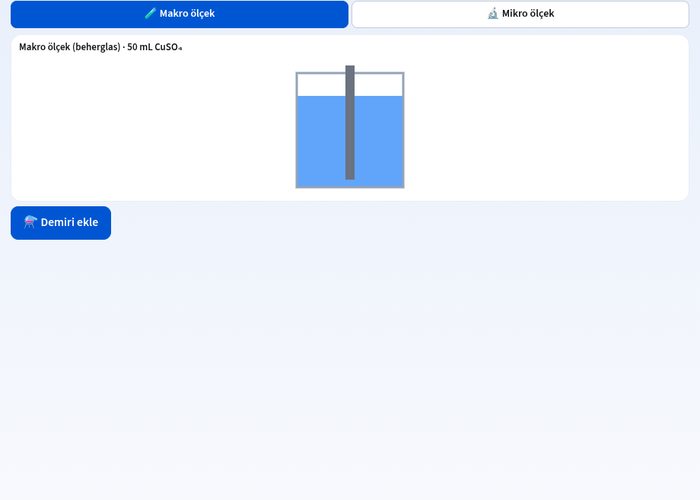
You can switch between macroscale (beaker) and microscale (spot plate) options.
You can test the same iron–copper sulfate reaction at two different scales.
You can examine data comparing the amount of CuSO₄ used, waste generated, cost, and time.
You can test your predictions and answer questions by progressing step-by-step with the guide.
Basic concepts and formulas
Green chemistry aims to reduce the use of hazardous substances and the generation of waste in chemical processes. Microscale experiments use chemicals at the microliter level instead of milliliters, saving costs while minimizing environmental impact. Reaction yield and consumption rates are examined using the basic relation: Consumption Rate = Amount of Substance Consumed / Reaction Yield.
How to use?
Open the simulation screen and read the guide's instructions.
Perform the reaction using the macroscale (beaker) option and record the values.
Switch to the microscale (spot plate) option and repeat the same reaction at the droplet scale.
Examine the consumption, waste, cost, and time data for both scales in the comparison table.
Click the check button to verify your results and complete the evaluations.
Frequently asked questions
Why are micro-scale experiments important?
Micro-scale experiments consume much fewer chemicals, produce almost no hazardous waste, lower costs, and are completed in a shorter time, offering a safe learning environment.
Does the reaction outcome change on a macro versus micro scale?
The chemical principles and products of the reaction remain the same; however, the quantities of substances used and the environmental impact differ significantly.
How are green chemistry principles applied in this simulation?
In accordance with the principles of waste prevention and the use of non-hazardous chemicals, sustainability is supported by choosing microscale methods that generate less waste.
 Interactive experiment