Matter cycles and environmental issues: watch evaporation, condensation, and precipitation in the 3D water cycle; order the steps of the carbon cycle; model how increasing the amount of CO₂ in the atmosphere changes global temperature and glaciers
Interactively discover the water, carbon, and nitrogen cycles in nature with the matter cycles and environmental problems simulation. In this experiment, by changing the amount of carbon dioxide in the atmosphere, you can observe the effects of global warming on glaciers and temperatures, while also examining the stages of the water cycle step by step.
What can you do in this simulation?
You can observe the evaporation, condensation, and precipitation processes by following the stages of the water cycle.
You can model global temperature changes by increasing and decreasing the amount of CO₂ in the atmosphere.
You can match photosynthesis, respiration, and food chain relationships in the carbon cycle steps.
You can discover the importance of nitrogen-fixing bacteria for soil and plants.
You can reinforce what you have learned and get instant feedback by answering the guided questions.
Basic concepts and formulas
The sustainability of life in nature depends on matter cycles. The water cycle occurs as water evaporated by solar energy rises, condenses, and returns to the earth as precipitation. Photosynthesis and respiration play a fundamental role in the carbon cycle: CO₂ + H₂O -> Food + O₂ (Photosynthesis equation). The accumulation of CO₂ and other greenhouse gases in the atmosphere traps the heat reflected from the earth's surface, leading to global warming.
How to use?
Open the experiment panel to examine the steps of the water cycle under guidance and create precipitation.
Place the cards into the correct boxes by dragging and dropping or tapping to match the steps of the carbon cycle and environmental problems.
Observe the system's reaction by changing the amount of CO₂ in the atmosphere using sliders or buttons.
Test your predictions by clicking the check predictions button and complete your missing points with the help of the guide.
Frequently asked questions
How does the water cycle occur?
Water sources heated by solar energy evaporate and rise, cool and condense in the atmosphere to form clouds; when the droplets become heavy, they return to the earth as precipitation.
What happens if CO₂ increases in the atmosphere?
An increase in the amount of carbon dioxide in the atmosphere strengthens the greenhouse effect, which leads to a rise in global temperatures and disruption of climate balance.
Why is the nitrogen cycle important?
Nitrogen is present in the DNA and protein structure of living organisms, but it cannot be taken directly from the air; thanks to nitrogen-fixing bacteria, it passes into the soil and becomes usable by plants.
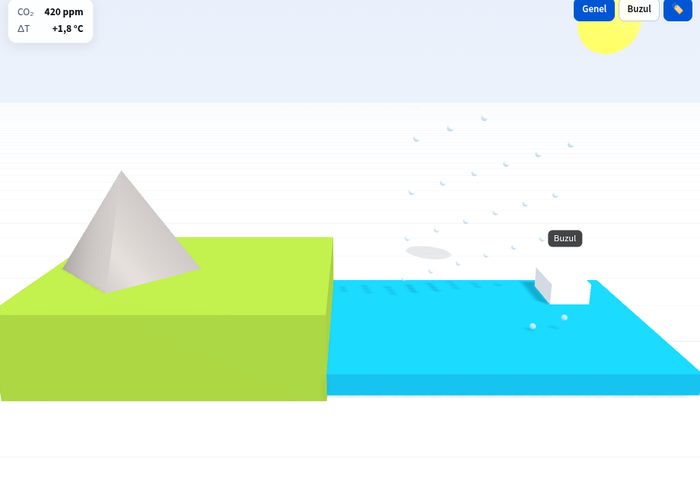 Interactive experiment